
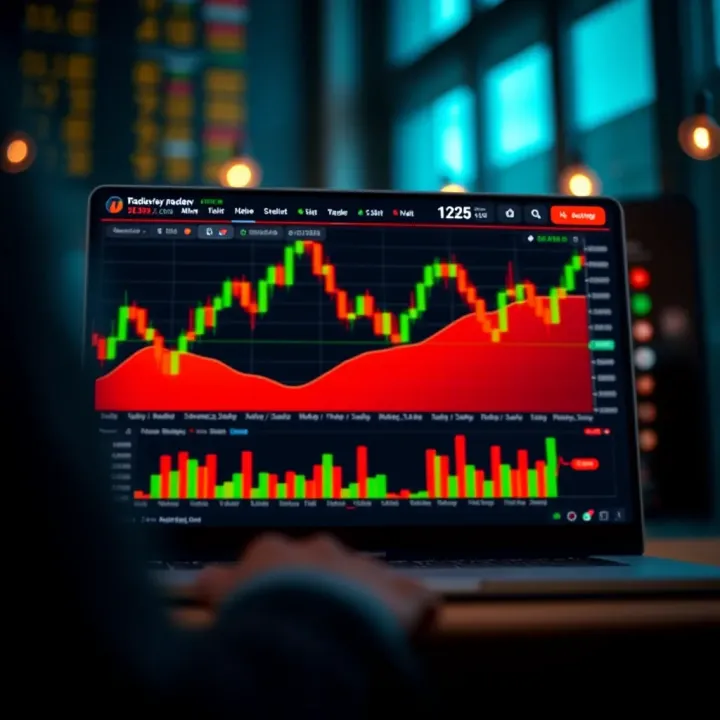
Using TradingView with Deriv.com: Guide for Nigerian Traders
📊 Discover how Nigerian traders can seamlessly integrate TradingView with Deriv.com to analyze markets, execute trades, and manage risks effectively with ease!
Edited By
Thomas Reed
Deriv's integration with TradingView brings a fresh and powerful dimension to online trading in Nigeria. It combines Deriv’s accessible trading platform with TradingView’s advanced charting tools, giving Nigerian traders clearer insights and faster trade execution.
For many traders here, understanding price movements with precision can be tough. TradingView equips users with customisable charts, multiple indicators, and drawing tools. This helps traders spot trends, reversals, and key support or resistance levels swiftly.

Deriv’s partnership with TradingView means you don’t need to switch between platforms. You get a seamless experience where analysing charts and placing trades happen within the same interface. This saves time and reduces mistakes, especially when the market moves fast.
Here are some quick points Nigerian traders should know:
Real-time updates: Charts reflect live market data, crucial for reacting to volatile market moves.
Custom indicators: You can build or use community-created strategies to suit your trading style.
Multi-asset access: Trade forex, commodities, cryptocurrencies and indices on one platform.
Easy account linkage: Your Deriv account connects directly to TradingView, simplifying your workflow.
Using Deriv's TradingView integration wisely means more than just charts. It offers a practical edge in Nigeria’s challenging market conditions — from naira fluctuations to power outages that demand fast, efficient decision-making.
In the sections that follow, we will break down how to set up your trading account, use key features effectively, and apply risk management strategies tailored to Nigeria's trading environment. This will help you maximise benefits from this integration while staying safe in your trading journey.
Understanding Deriv's integration with TradingView is crucial for Nigerian traders seeking both advanced market tools and straightforward trading execution on a single platform. This combination offers access to detailed chart analysis and real-time market data, which traditionally required using separate services. For traders in Nigeria, this means faster decision-making and more precise control over trades, especially amid the often volatile naira exchange rates.
Deriv is a popular online trading platform known for catering to a range of financial instruments including forex, commodities, and synthetic indices. Its ease of use and adaptable interface suit both beginners and seasoned traders. Deriv provides Nigerian users with a practical gateway to international markets, supporting local payment methods and registration processes that incorporate BVN and NIN checks.
TradingView, on the other hand, is a leading charting platform widely recognised for its rich technical analysis tools. It provides real-time charts, a broad selection of technical indicators, and a customised scripting language to build trading strategies. Its social networking feature allows traders to share insights, making it a valuable resource for remaining in tune with market sentiments.
Deriv's integration of TradingView tools means users can access sophisticated charting options directly on the Deriv platform without toggling between apps. This integration allows traders to analyse price movements, apply technical indicators, and place trades within the same environment. For example, a trader monitoring the USD/NGN forex pair can study multiple moving averages on TradingView charts and execute trades instantly on Deriv, saving precious time during volatile market conditions.
Access to advanced market analysis tools through this integration levels the playing field for Nigerian traders. Many local traders often rely on basic apps or outdated charting tools, which limits their ability to anticipate market moves effectively. With TradingView's dynamic charts and indicators embedded in Deriv, Nigerian traders can monitor key currency pairs like USD/NGN or commodities like crude oil more precisely.
The user-friendly interface delivered by this combination is particularly important in Nigeria, where internet speeds and data costs can be a barrier. Deriv ensures the interface is clean and intuitive, reducing the learning curve for new traders. This ease of use encourages more consistent trading habits, enabling users to seize opportunities promptly without getting lost in cumbersome menus.
Furthermore, the platform's design supports a wide variety of assets, making it suitable for diverse trading interests. Nigerian traders can explore forex markets affected by the Central Bank of Nigeria's policies, commodities tied to international price swings, or synthetic indices offering fixed-volatility trading. This variety means traders do not have to jump between multiple platforms to diversify their portfolios.
In summary, this introduction sets the stage for Nigerian traders to harness a powerful, integrated trading platform that fits the unique challenges and opportunities of their local market.
Setting up and navigating Deriv's TradingView integration is a key step for Nigerian traders aiming to maximise their market opportunities. This phase ensures smooth access to essential tools like real-time charts and technical indicators, allowing traders to make informed decisions. Practical familiarity here means you avoid unnecessary delays and errors that could cost money, especially in volatile markets like forex or commodities.
The registration process for Nigerian users is straightforward but tailored to local realities. When signing up, you'll provide your standard personal information alongside Nigeria-specific details such as your Bank Verification Number (BVN) and National Identification Number (NIN). These details help comply with the regulatory environment, making your account fully compliant under local financial laws.
KYC (Know Your Customer) requirements are quite strict for Deriv accounts. Providing your BVN and NIN is mandatory because it ensures your identity matches official government databases. This reduces fraud risk and helps you trade securely. For example, if you try to withdraw funds, having these documents verified speeds up the process and avoids potential hiccups with payments or compliance checks.
Funding your account in Nigerian Naira (₦) is a huge advantage for local traders. It means you won't constantly worry about exchange rate fees or converting foreign currency before trading. Many deposit options support Naira transactions, like bank transfers and local cards. For instance, if you fund with ₦50,000, the exact amount reflects on your Deriv balance, making bankroll management clearer without extra deductions.

Accessing charts and technical indicators on Deriv TradingView is seamless and intuitive. Once logged in, you can view various market assets like forex pairs, commodities, or synthetic indices with live charts updated in real-time. Popular indicators such as Moving Averages and RSI (Relative Strength Index) are just a click away, offering practical insights useful for timing trades.
Customising chart layouts lets you adapt the workspace according to your strategy and style. For example, you can arrange multiple charts side by side or overlay indicators that matter most to you. Nigerian traders often use this feature to watch naira-dollar trends alongside commodities like oil prices at the same time, saving precious moments.
Perhaps the most attractive feature is the ability to place trades directly from the TradingView interface without switching screens. After analysing a chart, you can execute market or limit orders swiftly, reducing the risk posed by price movements during platform toggling. This is especially handy during high action periods like the London or New York forex sessions when seconds count.
Efficient setup and navigation of Deriv TradingView open up opportunities for Nigerian traders to act confidently. Through localised account features, seamless funding in naira, and immediate trade execution from rich charting tools, you are better positioned to respond to market moves with agility.
In essence, mastering this section lets you trade smarter, not harder, turning advanced technology into everyday profit opportunities.
Trading effectively on any platform depends largely on the tools available to the trader. Deriv’s integration with TradingView brings a suite of practical features and key tools tailor-made to help Nigerian traders navigate complex markets with less stress. These tools not only sharpen market analysis but also improve trade execution, which is critical in volatile markets like those impacted by naira fluctuations.
Moving averages smooth out price data to help spot trends more clearly. Nigerian traders often use the simple moving average (SMA) or exponential moving average (EMA) to determine market direction over different periods. For example, during ember months when forex volatility spikes, a 50-day SMA can reveal if the naira-dollar pair is trending up or down. Meanwhile, the Relative Strength Index (RSI) gauges whether an asset is oversold or overbought, signalling potential reversal points to avoid costly entry mistakes.
Bollinger Bands add a dynamic range around moving averages, widening or contracting based on market volatility—very useful for Nigerian traders watching commodities like crude oil or gold. When prices hit the band edges, it suggests overextension, signalling possible pullbacks. Likewise, the Moving Average Convergence Divergence (MACD) helps identify momentum shifts by comparing fast and slow EMAs. Traders often rely on MACD crossovers to enter or exit positions, especially in the synthetic indices where price swings can be rapid.
Volume indicators show the number of assets traded over a period and help confirm price moves. In Nigerian markets, where sudden news—like CBN monetary policy changes—can cause swift price shifts, volume spikes often validate breakouts or breakdowns. High volume during a breakout suggests genuine trader interest, reducing the risk of a false signal.
Market orders execute immediately at the best available price, suitable when quick entry or exit is essential during volatile periods, such as the naira’s reaction to government announcements. However, they might suffer slippage in fast markets. Limit orders let traders specify a price to buy or sell and execute only when the market reaches that level. Nigerian traders use limit orders to avoid overpaying for forex or to lock in favourable prices on commodities without constantly monitoring the market.
Stop-loss orders automatically close a trade when losses reach a specified amount, protecting traders from larger unexpected downturns. Similarly, take-profit orders close positions once a target profit level hits, securing gains without needing constant oversight. These functions are essential for beginners or traders managing multiple positions, especially during Nigeria’s frequent market swings related to oil price changes or naira exchange rate adjustments.
Deriv offers swift order execution with minimal latency, a major advantage in markets where a few seconds can decide profit or loss. Leveraging its TradingView integration, Deriv allows placing trades directly from the chart interface, speeding up decision-making and reducing errors. For Nigerian traders coping with internet instability, this streamlined process ensures you get your orders through promptly when connectivity is stable.
Strong execution speed and well-chosen order types are as important as analysis. Using Deriv’s tools smartly allows traders to react quickly and manage risk effectively, turning opportunities into profitable trades.
Using strategic approaches on Deriv’s TradingView matters a lot for Nigerian traders. It helps you make sense of complex market data and apply practical techniques tailored to local conditions. Whether you trade forex, commodities, or synthetic indices, having clear strategies improves your chances of consistent profits and controls risks effectively.
Adapting forex strategies to naira volatility requires awareness of how fluctuations in the naira-dollar exchange rate impact trades. Forex markets involving the naira often experience sudden swings due to CBN policies, dollar scarcity, or political developments. For example, a trader using Moving Average Convergence Divergence (MACD) signals on Deriv TradingView should also watch Nigeria’s foreign reserve levels or CBN announcements. That’s because technical patterns may break down sharply during heavy naira instability, so combining chart signals with local economic news offers better timing.
Commodities trading outlook in Nigeria revolves mainly around crude oil, cocoa, and agricultural products. On Deriv, TradingView charts for commodities futures enable traders to spot supply and demand shifts. Nigerian crude prices often reflect not just global benchmark moves but also domestic production interruptions, pipeline vandalism, or OPEC decisions. A practical approach for traders is to use Bollinger Bands combined with volume spikes on Deriv to catch sudden price expansions during supply shocks. This method works well, especially when cross-checking with Nigeria-specific news feeds.
Synthetic indices strategies for beginners focus on simulated markets reflecting real-world volatility but running 24/7 without physical commodities. Beginners should start slow, using simple indicators like Relative Strength Index (RSI) to spot overbought or oversold levels on Deriv TradingView. Since synthetic indices mimic market noise rather than fundamentals, beginners can try range-bound trading or break-out techniques within limited time frames. Deriv’s flexible charting tools allow quick adjustments between timeframes, making it easier to test strategies without risking real commodity or forex assets.
Setting realistic profit targets means avoiding greed that leads to overtrading or impatience. Many Nigerian traders jump from one opportunity to the next without clear exit plans. On Deriv TradingView, you can plot resistance and support lines to visualise where to set take-profit points logically. For instance, if gold price approaches a historic resistance level on the chart, it’s wise to close or scale down a position there rather than hoping for another surge. Keeping targets aligned with chart signals and market context prevents unnecessary losses.
Managing leverage carefully is critical given how leverage can magnify gains and losses. Though brokers like Deriv offer leverage up to 1:500, Nigerian traders should treat high leverage with caution because local market unpredictability—currency shortages or political events—can trigger fast reversals. Starting with low to moderate leverage around 1:10 to 1:50 allows better control without risking your capital severely. TradingView’s integrated position size calculators help estimate risk exposure precisely.
Using stop-loss orders consistently helps protect from sudden adverse price moves, especially in volatile Nigerian markets. Placing stop-loss orders linked to technical levels such as recent swing lows or moving averages creates an automatic exit if the price turns unfavourable. For example, if you buy crude oil at ₦12,000 per barrel equivalent, setting a stop-loss at ₦11,700 based on a chart’s support level limits potential downsides. Consistent use of stop-loss reduces emotional trading and guard against losses during sharp naira depreciation or other shocks.
Trading on Deriv with TradingView tools is not just about spotting opportunities but managing your money smartly according to Nigeria’s unique market conditions.
Successful trading combines technical insight and practical risk controls, especially when local factors like naira volatility, commodities supply issues, and synthetic market dynamics come into play.
Trading on Deriv using TradingView integration brings numerous opportunities, but Nigerian traders face unique challenges that can affect their experience and results. Addressing issues like internet reliability, power supply, and regulatory environment is essential to maximise the platform’s benefits and avoid costly setbacks.
Impact of network instability on real-time trading
Reliable internet is the backbone of any online trading, especially for a platform that offers real-time TradingView charts and live order execution. In Nigeria, frequent network interruptions or slow speeds can lead to missed trading signals or delayed order placements. For instance, if your market order does not go through immediately during a sharp naira fluctuation, you might end up with less favourable prices or unexpected losses.
This lag is especially critical when trading volatile assets or using short-term strategies where seconds matter. Traders often find themselves chasing the price or struggling to close positions on time due to connectivity hiccups, which reduces the effectiveness of advanced tools available on Deriv.
Ensuring device backup during power outages
Power supply in Nigeria remains unreliable in many areas, and outages can disrupt trading sessions unexpectedly. To avoid losing access to your Deriv TradingView interface mid-trade, it’s wise to invest in devices with extended battery life like power banks or laptops with large batteries.
Besides, having a backup power source such as an inverter or generator can provide a safety net during longer outages. For example, a ₦20,000 inverter setup connected to a decent battery can keep your trading workstation alive long enough to close or adjust critical trades. Ignoring these precautions could mean losing strategic positions due to an abrupt disconnection.
CBN’s stance on online forex trading
The Central Bank of Nigeria (CBN) has maintained a cautious approach to online forex and binary options trading, issuing warnings to Nigerian traders about the risks of unregulated brokers. While Deriv operates with relevant licences, Nigerian traders should always verify if brokers comply with local regulations to avoid falling victim to scams.
Awareness of the CBN’s position helps traders approach online trading with heightened vigilance, ensuring they pick platforms like Deriv that shield users with transparent policies and strong security measures.
Nigeria’s foreign exchange restrictions
Nigeria’s foreign exchange market is tightly regulated, with limits on naira conversion and cross-border transfers affecting forex trading liquidity. For instance, converting profits from dollars to naira can be challenging during times of currency shortage or when official rates differ significantly from parallel market rates.
This creates uncertainty for Nigerian traders who want to withdraw their earnings seamlessly. Being mindful of these restrictions means monitoring exchange rate developments and working with brokers that provide smooth local funding and withdrawal options in naira.
Tax implications for trading profits
Profits from trading on Deriv are subject to Nigerian tax laws. Currently, gains from trading form part of your taxable income and should be declared to the Federal Inland Revenue Service (FIRS) during annual filings. Failure to report earnings could attract penalties or compliance issues.
Professional traders or those earning steady income from Deriv should maintain clear records of trades and consult tax advisors to optimise compliance and avoid surprises. Also, reinvesting profits wisely rather than repeated withdrawals may help manage tax liabilities better.
Nigerian traders must consider both practical challenges like internet and power supply as well as regulatory and financial factors before fully committing to Deriv trading. Preparing for these realities strengthens your strategy and safeguards your investments.
📊 Discover how Nigerian traders can seamlessly integrate TradingView with Deriv.com to analyze markets, execute trades, and manage risks effectively with ease!

🚀 Learn how to combine TradingView & Deriv for smarter trading in Nigeria. Get tips on setup, chart tools, indicators, and real-time market analysis!

📊 Master TradingView with Deriv in Nigeria! Learn to use indicators, set up charts, and boost your trading skills with this detailed guide.

📈 Learn how Nigerian traders can boost profits using TradingView with Deriv. Get clear steps to link accounts, master charts & indicators, and avoid common trading pitfalls.
Based on 9 reviews