
Using TradingView for Binary Options: A Practical Guide
📈 Discover how Nigerian traders can use TradingView's charts, tools, and indicators for smarter binary options trading with practical tips and strategy insights.
Edited By
Thomas Reed
Binary options trading has gained traction among Nigerian traders in recent years, largely due to the straightforward nature of predicting market movements within set timeframes. However, succeeding in this high-risk field requires more than gut feeling or guesswork; it demands precise market analysis and timely decisions. This is where TradingView becomes highly relevant.
TradingView is an advanced charting platform widely used globally for technical analysis. Nigerian traders often underestimate its value, focusing solely on brokers' tools, not realising how TradingView’s features can sharpen their market insights. With TradingView, you get access to live charts, customisable indicators, and an active community of traders sharing ideas.
For binary options, which typically involve making quick decisions based on price movements, TradingView offers:
Accurate real-time data: Traders get updates across various assets, including forex pairs, commodities, and indices relevant to the Nigerian market.
Custom indicators: You can tailor tools to match your strategy, whether trend-following or momentum-based.
Alerts and notifications: These help catch critical price levels or patterns so you don’t miss out.
Mastering TradingView features allows Nigerian traders to reduce guesswork and trade binary options with a more informed approach.
That said, it's important to remember that TradingView is a tool, not a crystal ball. While it improves your analysis, binary options still carry significant risks, especially if trading on short expiry times without a solid strategy.
In the context of Nigeria's market dynamics—such as naira volatility, limited access to certain asset classes, and intermittent internet connectivity—integrating TradingView's mobile and desktop platforms smartly is vital. For example, pairing TradingView analysis with local knowledge of economic announcements or energy sector fluctuations can boost your odds.
This article will break down practical ways Nigerian traders can employ TradingView for better decision-making in binary options trading, delve into strategies suited for the local market, and warn against common traps that beginners often fall into.
TradingView has become a vital tool for Nigerian traders, especially those venturing into binary options. Its strong charting capabilities and user-friendly interface make it well-suited for analysing short-term price movements, which is essential in the fast-paced world of binary trading.
TradingView offers an interactive platform that combines advanced charting tools with social networking features. Traders can access a variety of chart types, timeframes, and technical indicators, all laid out in a clean interface that both beginners and experienced users appreciate. For instance, you can switch between 1-minute and 15-minute intervals effortlessly, which is key for spotting quick trading opportunities.
One notable feature is the community-driven scripts and strategies, allowing users to share and customise tools based on real market insights. This flexibility helps traders fine-tune their approach without overwhelming them with unnecessary complexity.
TradingView supports various account tiers, starting with a free option that covers basic needs like standard charts and limited indicators. For Nigerian traders experimenting with binary options, the free version often suffices to observe market trends and test strategies.
Paid accounts unlock more features such as multiple chart layouts and faster data feeds, which might appeal to those trading larger volumes or needing real-time updates without delay. Access is web-based and mobile-friendly, meaning you can track Nigerian and global markets on your phone even when stuck in Lagos traffic or at a busy market.
Binary options involve predicting whether an asset's price will rise or fall within a fixed timeframe. Trades are simple: either a 'call' if you expect prices to go up or a 'put' if down. The payoff is usually fixed, so the risk and reward are straightforward—either you win a set return or lose your stake.
This simplicity attracts many Nigerian traders who prefer clear outcomes over complex derivatives. However, the fast expiry times require reliable and timely market data, making precise analysis tools like TradingView invaluable.
Binary trading has gained attention in Nigeria due to increasing internet penetration and interest in quick returns. Many view it as a side hustle or alternative investment alongside traditional options like fixed deposit or stocks.
However, the market carries risks including the choice of trustworthy brokers and regulatory uncertainties. Markets on TradingView include not only local equities but also forex, commodities, and indices, giving Nigerian binary traders broad exposure to assets beyond the naira region.
In binary options, timing is everything. TradingView offers tools to analyse momentum, trend strength, and price reversals within minutes, helping you decide when to enter or exit trades. Features like time-based candlestick charts and volume overlays sharpen your sense of market rhythm.
For example, spotting a resistance level on a 5-minute chart before a key economic announcement can guide a timely 'put' option.
TradingView supports essential technical indicators such as Moving Averages and the Relative Strength Index (RSI), which provide clues about price direction and overbought or oversold conditions. Nigerian traders can combine these to gauge market sentiment quickly.
Support and resistance zones marked on charts help identify potential price barriers important for binary strikes. With options often expiring within minutes to hours, this precise snapshot of market data enhances decision-making.
Using TradingView effectively balances insight with speed—critical for improving the odds in Nigeria’s lively binary options scene.
Setting up TradingView properly can make or break your success in binary options trading. Nigerian traders face fast-moving markets where split-second decisions matter, so tailoring the platform to match short time frames and quick analysis is essential. This section explains how to choose charts, apply technical tools, and use alerts to optimise your trading.
Selecting short-term candles and intervals is key for binary options since trades often last from minutes to a few hours. On TradingView, you can select candle intervals as brief as 1 minute, 5 minutes, or 15 minutes, which better capture price movements you need for quick prediction. For example, using 5-minute candles helps you spot entry and exit points faster when trading expiry times under one hour, making your trades more precise and timely.
Customising view for quick trades involves arranging your workspace to avoid delays. Traders in Nigeria should create a layout showing multiple assets simultaneously if needed, or keep indicator panels and chart tools easily accessible. This way, when a price action signals an opportunity, you don’t waste precious minutes hunting for tools or switching views. Custom shortcuts and saving chart templates on TradingView also speed up repeated analysis.
Moving averages and their application help identify the direction of short-term trends. For binary options, the 9-period and 21-period exponential moving averages (EMAs) are popular because they respond quickly to price swings. When the 9 EMA crosses above the 21 EMA, it suggests an upward momentum good for a call option, and vice versa for put options. This method suits the quick decisions needed in Nigeria’s fast market.
Relative Strength Index (RSI) for entry points gives insight into overbought or oversold conditions. An RSI below 30 may indicate an oversold asset ready for a price bounce, while above 70 suggests it might soon reverse from overbought. Nigerian traders can use this alongside moving averages to time entries, avoiding rushed decisions based only on price.
Support and resistance levels are price zones where the market tends to pause or reverse. Marking these on charts helps binary traders decide when to enter or exit trades. For example, if a stock on the Nigerian Stock Exchange (NGX) hits a strong resistance level repeatedly, you might anticipate a short-term drop and choose a put option.
How to create price alerts on TradingView is straightforward: you select a price level and specify conditions for sound or popup notifications. For example, you can set an alert when a currency pair crosses a particular moving average. This feature keeps you updated without constant chart-watching, vital for Nigerian traders who juggle trading alongside busy schedules.
Leveraging notifications to time trades means reacting quickly to market changes. Alerts push real-time information via app notifications or emails, allowing you to execute trades on your binary options broker swiftly. This reduces the lag between analysis and trade placement, which often decides win or loss.
Setting up TradingView with the right charts, indicators, and alerts streamlines your binary options trading process. It saves time and sharpens market insight, both invaluable when trading short-term contracts in Nigeria’s dynamic market.
By focusing on these setup details, traders can more effectively harness TradingView’s capabilities and gain an edge in binary options trading.
Practical strategies shape how traders translate data and charts into profitable actions. For binary options traders in Nigeria, employing tested techniques on TradingView improves decision-making and reduces guesswork. This section looks into key trading methods that fit short-term binary options, ensuring you understand when and how to act more confidently.
Identifying clear trends on TradingView is the starting point for many binary options traders. TradingView’s chart tools allow you to spot upward or downward movements by observing price patterns over short intervals, like 5 to 15 minutes. For example, if the price of a particular asset on the NGX Exchange shows a consistent rise with higher highs and higher lows, it indicates an uptrend. Recognising such trends helps avoid blindly placing trades against market momentum.
Timing binary trades along trends means entering trades when the trend shows strength but before it reverses. On TradingView, you can use moving averages or the Relative Strength Index (RSI) to find ideal entry points. For instance, during a clear uptrend, entering a ‘call’ option after a slight price dip—that aligns with the 50-period moving average support—can improve success rates. Timing here is crucial since binary options typically have short expiry times.
Spotting reversal signals involves detecting early signs that a trend may change direction. TradingView’s candlestick patterns like the hammer or shooting star often hint at reversals. In Nigeria’s market, if the currency pair USD/NGN shows a hammer candlestick after a downtrend, it's a sign buyers are stepping in. Using these reversal signals helps traders decide when to place ‘put’ or ‘call’ options before the market turns.
Using breakout confirmations means waiting for the price to push beyond support or resistance zones securely before trading. For example, a breakout above a resistance level on a 15-minute chart for an oil company stock listed on the NSE suggests bullish momentum. Confirmation comes if the volume increases alongside the breakout. Confirmed breakouts reduce false signals that can erode capital quickly in binary options.
Setting trade sizes relative to capital safeguards your funds over time. Binary options can be tempting to over-invest in single trades, especially during volatile moments. A practical approach is risking just 1–2% of your trading capital per trade. If your trading budget is ₦50,000, limit each trade to ₦500–₦1,000. This prevents a few losses from wiping out your account.
Avoiding overtrading and chasing losses is vital to stay disciplined. Nigerian traders sometimes get caught in the heat of the moment, making multiple trades rapidly or trying to recover losses by increasing stakes. TradingView’s alert tools can help here by reminding you of your trade limits or signalling when to pause. Staying patient and sticking to your plan beats emotional trading that drains resources.
Successful binary options trading relies equally on strategy and discipline. Using TradingView to spot trends, reversals, and breakouts, coupled with sound risk control, positions Nigerian traders for better results in the fast-paced binary market.
When Nigerian traders use TradingView for binary options, understanding its limits is necessary for effective trading. While TradingView offers rich charts and technical tools, it does not operate as a trading platform itself, which means traders must combine its insights with other services to execute trades. Being aware of these boundaries ensures you don’t rely too heavily on tools outside their intended scope.
TradingView provides analytical charts and technical indicators, but it doesn’t allow users to place binary options trades directly on its platform. This means while you can analyse the price movement, trends, and entry points there, you must visit a licensed binary options broker to make actual trades. Traders often think they can manage everything in one place, but TradingView serves as a market scanner and signal generator, not a brokerage.
For Nigerian traders, this separation means you must use TradingView alongside a trusted broker. For example, after identifying a potential trade setup on TradingView, you’d switch to your broker’s platform—like Pocket Option or IQ Option—to place your binary trade. This two-step process requires discipline and speed, especially since binary options involve short expiry times.
TradingView offers both free and paid data feeds. The free version generally provides delayed information, sometimes by a few seconds to minutes, which can be critical in binary options where timing is everything. Paid plans offer real-time data access, which can cost anywhere from a few thousand naira monthly but provides greater accuracy.
For instance, a trader depending on free data might mistime an entry because a price breakout appears late, resulting in a losing trade. Having near-instant data reduces this risk. Therefore, Nigerian traders should consider upgrading if they want to trade with precision and stay competitive, especially with naira's volatility sometimes impacting market reactions.
Timing data correctly in binary options is more vital than in longer-term trading. Even a few seconds’ delay can mean the difference between profit and loss. Alerts and chart updates need to be as close to real-time as possible to match the expiry periods that can be as short as 60 seconds.
Quick, reliable pricing and alerts are the backbone of successful binary options trading. TradingView’s data lag might be a stumbling block unless you invest in the paid service.
Binary options trading in Nigeria is legally sensitive because the Financial Markets Regulators have yet to set clear guidelines. Traders need to proceed cautiously as many binary brokers operate without direct approval from Nigerian authorities. The Central Bank of Nigeria (CBN) and Securities and Exchange Commission (SEC) have issued warnings about the risks involved.
Choosing a broker who complies with international and Nigerian rules helps protect your funds. Look for brokers with transparent operations, proper licensing, and good reviews from Nigerian traders. Since trading binary options can attract scams, due diligence reduces the risk of losing money to unregulated operators.
In summary, TradingView is a valuable tool, but Nigerian traders should pair it with trustworthy brokers, consider paying for real-time data, and stay alert to regulatory shifts. Understanding these limitations will help you make better, safer trading decisions in the Nigerian binary options market.
Using TradingView effectively can give Nigerian binary options traders a significant edge. This platform offers clear charting tools and technical indicators that cater well to short-term strategies typical in binary trading. However, traders must combine these tools with careful planning and awareness of local market quirks to optimise outcomes.
Key takeaways for traders: TradingView simplifies market analysis by offering easy-to-read charts with real-time data and a variety of indicators like RSI and moving averages. These features help traders quickly spot trends, reversals, and entry points, all crucial for timed binary options trades. For instance, a trader might use the RSI on a 5-minute chart to decide whether to place a call or put option during volatile moments, such as after CBN interest rate announcements.
Besides its technical tools, TradingView’s alert system is practical for Nigerian traders managing positions amid busy schedules or power inconsistencies common across many states. Receiving alerts on price movements via mobile devices ensures timely decision-making even on the go.
How to combine TradingView with local market knowledge: Technical analysis alone doesn’t guarantee success. Nigerian market conditions – including naira fluctuations, fuel subsidy decisions, and political events – affect price behaviour significantly. Traders gain more by aligning TradingView insights with these external factors. For example, knowing that ember months historically see increased market volatility, a trader can use TradingView tools to monitor price swings more carefully during this period.
Moreover, understanding local broker reliability and regulations can help avoid pitfalls. Combining TradingView analysis with broker credibility checks ensures not just good entry signals but also safe execution.
Developing a personal trading plan: To make the most of TradingView, Nigerian traders should build a clear, disciplined trading plan tailored to their capital and risk tolerance. This includes deciding on the amount to allocate per trade, preferred binary options expiry times, and criteria for entering or exiting trades based on TradingView alerts. A typical approach might be limiting risk to 2% of capital per trade while using TradingView’s chart signals for confirmation.
Additionally, regular review of performance helps refine strategies. For instance, noting that certain technical setups perform better during specific market hours or economic announcements allows more efficient use of TradingView features.
Resources for further learning and tools: Interested traders can online find resources like webinars from Nigerian fintech firms such as Paystack or Flutterwave, which occasionally host sessions on market analysis. Additionally, local forums and trading communities on platforms like Telegram or WhatsApp provide practical shared experiences.
Utilising educational material from respected institutions like the Nigerian Stock Exchange (NGX) or reading reports from CBN helps traders understand broader market forces. Supplementing TradingView with Nigerian-specific news apps or economic calendars ensures timely contextual interpretation of signals.
Effective use of TradingView in Nigeria relies not just on the tool itself but on blending its insights with careful planning and local market awareness. Treat it as a compass, not a crystal ball.
By integrating these approaches, Nigerian binary options traders can improve decision quality and manage risks better in a complex and fast-moving market.
📈 Discover how Nigerian traders can use TradingView's charts, tools, and indicators for smarter binary options trading with practical tips and strategy insights.
📈 Learn to integrate TradingView charts and indicators for binary options trading in Nigeria. Step-by-step tips to boost your strategy and platform usability.
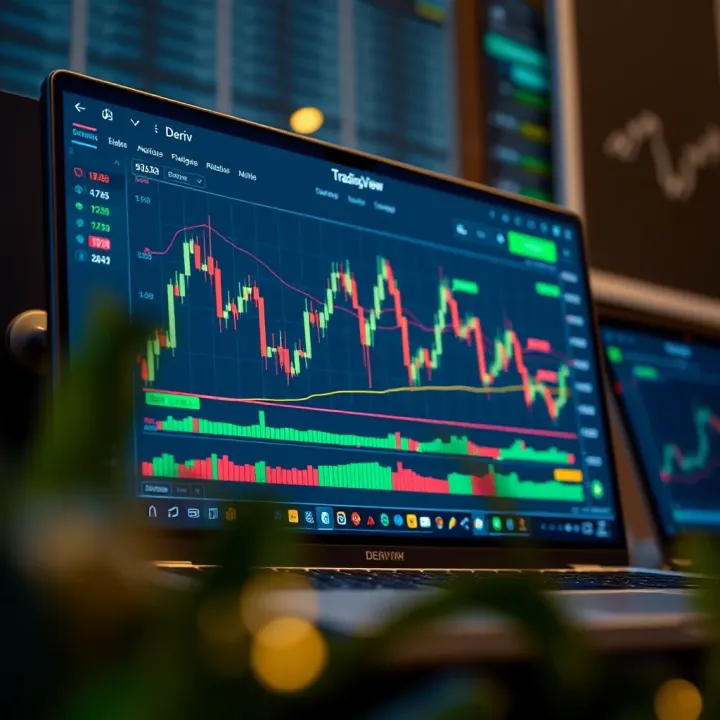
📊 Master TradingView with Deriv in Nigeria! Learn to use indicators, set up charts, and boost your trading skills with this detailed guide.
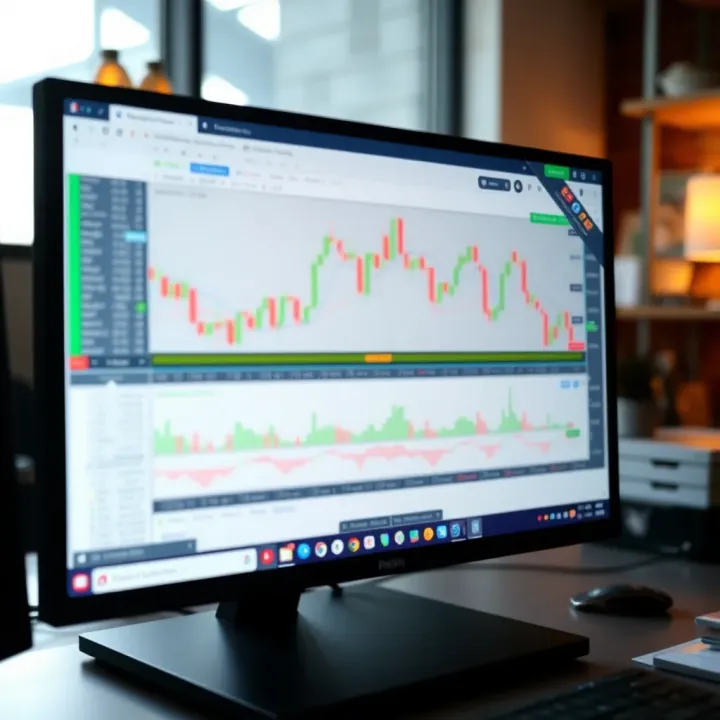
Explore how to use TradingView for free 📈! Learn the features, limits, and tips tailored for traders in Nigeria 🇳🇬 to make smart market moves.
Based on 5 reviews