

Using TradingView on Deriv: Guide for Nigerian Traders
📈 Learn how Nigerian traders can boost profits using TradingView with Deriv. Get clear steps to link accounts, master charts & indicators, and avoid common trading pitfalls.
Edited By
Henry Mitchell
Maven Prop Firm has emerged as a solid option for Nigerian traders looking to boost their trading capital without risking personal funds. Unlike trading independently, prop firms provide funded accounts, allowing traders to manage larger sums of money while sharing profits with the firm. This arrangement is especially appealing in Nigeria, where access to substantial capital often limits traders' growth.

Maven operates by evaluating traders' skills through specific challenges or evaluation programs. Once traders meet the firm's criteria—typically involving consistent profit and carefully controlled risk—they gain access to funded accounts ranging from thousands to hundreds of thousands of US dollars or naira equivalent. This model lets talented traders leverage big money without needing to deposit their own cash.
Capital Access: Traders can handle sizeable capital, often between $10,000 to $100,000 and above.
Profit Sharing: Earnings are shared; much depends on the profit split arrangement, commonly 70/30 or 80/20 favouring the trader.
Risk Controls: Maven sets daily and overall drawdown limits to protect its capital, which the trader must follow strictly.
Educational Support: Some prop firms offer mentorship and resources, helping traders improve strategies.
Trading with prop firms like Maven can fast-track your journey from small to professional trader if you stick to their rules and demonstrate steady performance.
In Nigeria, funding options are limited and often expensive due to currency volatility and high-interest rates. Maven offers a practical alternative—access to significant capital without loans or collateral. Plus, managing a funded account reduces the pressure of risking personal wealth.
Imagine a Lagos-based trader with ₦500,000 in savings. With Maven, they can manage a $25,000 (about ₦12 million) account, increasing potential monthly profits regardless of local currency challenges. Such scale is difficult independently.
This introduction sets the stage for a closer look at how Maven operates, the benefits and hurdles Nigerian traders face, and how it compares to other options in the market.
Proprietary trading firms, or prop firms, are companies that offer traders access to a pool of capital to trade financial instruments like stocks, forex, or commodities. Instead of using their personal funds, traders are backed by the firm’s money, sharing a percentage of the profits they generate. This setup is significant for traders, especially in Nigeria, where access to large trading capital can be a major hurdle due to limited personal savings or restrictive borrowing options.
Globally, prop firms play an important role in financial markets by enabling skilled traders to operate at larger scales without needing personal capital. In Nigeria, while retail trading is growing, many traders struggle with insufficient funds and limited exposure. Prop firms provide a way to bridge this gap, allowing Nigerian traders to compete more effectively in both local and international markets. The attraction lies in leveraging company capital rather than risking personal assets.
Maven Prop Firm, established recently but gaining traction, offers a convenient way for traders to access trading capital through a straightforward process. The company provides risk-managed funding, emphasising transparency and trader support. Unlike typical brokers that only provide trading platforms, Maven combines capital provision with a structured evaluation and profit-sharing plan. This matters especially for Nigerian traders who want to scale their trading without heavy initial investment.
Maven’s business model revolves around funding traders after they prove consistent ability during an evaluation phase. They supply substantial capital, sometimes up to tens of thousands of dollars or equivalent in naira, so traders have enough room to execute bigger trades. This model benefits Nigerian traders by removing the personal capital ceiling and offering professional-grade resources.
The typical journey with Maven starts with a two-stage evaluation. First, traders enter a simulation phase to show they can trade profitably while managing risk. Successful candidates then move to a funded phase, where real capital is allocated. This phased approach ensures that only capable traders receive funding, protecting the firm's assets and pushing traders to maintain discipline.
Profit sharing usually works as a split, where successful traders receive a substantial portion of gains, often above 70%. There are clear obligations involved, including following strict risk rules and meeting monthly targets. For Nigerian traders, this setup means the chance to earn without risking their savings but requires commitment and adherence to firm policies.
Traders should view Maven as both a capital partner and a disciplined structure, not just free money. The firm focuses on sustainable trading performance rather than one-time wins.
In summary, understanding how Maven Prop Firm works helps Nigerian traders leverage larger funds responsibly, access better trading tools, and share in profits – all while minimizing personal financial risk. The firm’s structured evaluation process and profit-sharing agreements make it a practical option for those looking to grow within a regulated, supportive environment.
Maven Prop Firm offers Nigerian traders clear advantages, especially for those aiming to grow their trading career without risking vast personal funds. Its structure allows traders to access substantial capital, backed by experienced support and technology, which can be a real edge in Nigeria's dynamic but challenging trading environment.
One key benefit of trading with Maven is the leverage traders gain. Instead of being limited by their own savings or small investments, Nigerian traders can manage much larger positions. For instance, a trader with just ₦200,000 personal capital might work with Maven’s provided capital of ₦5 million or more. This amplifies potential returns since profits come from a bigger base, allowing even modestly skilled traders to earn meaningful income.
Beyond leverage, this capital access means a trader can explore opportunities otherwise out of reach. Many Nigerian traders struggle with funding constraints, often due to inflation or economic uncertainty. Maven removes this hurdle, providing a runway for tested strategies that require substantial funds to be truly profitable.
Trading solely with personal capital in Nigeria often exposes traders to heightened risks and limits profit possibilities. Many tend to trade cautiously or scale down strategies to manage their limited funds. This restricts growth and sometimes leads to frustration.
Maven’s funding model shifts this dynamic. By providing capital through a formal evaluation and funding process, traders get to keep their personal savings intact. This is particularly important in Nigeria where economic volatility means many hesitate to place large sums on trading ventures. With access to Maven’s capital, traders can refine skills and gain experience without jeopardising their financial stability.
Maven offers access to reputable trading platforms widely recognised globally. Nigerian traders typically use MetaTrader 4 and 5, which Maven supports, ensuring they enjoy swift execution, intuitive interfaces, and advanced charting tools. These platforms are vital for analysing market movements and making informed trades.
On top of that, Maven provides educational materials such as webinars, tutorials, and community forums to boost traders’ knowledge. Many Nigerian traders find risk management challenging, so these resources emphasise tools like stop-loss orders and position sizing. These help control downswings and protect capital, improving long-term success rates.
One standout advantage is reduced personal financial exposure. Since traders work with Maven’s funds, a poor trade doesn’t wipe out their savings physically. This eases the psychological pressure and encourages discipline.
Still, Maven enforces accountability through strict performance targets, encouraging traders to maintain consistent strategies and prudent behaviour. Traders face monthly evaluation benchmarks—if they miss these, they risk losing access. Such measures foster professional attitude and risk awareness, qualities sometimes missing when trading solo in Nigeria’s unstructured landscape.
Trading with Maven allows Nigerian traders to balance ambition with caution, using large capital and solid support systems, yet without risking their personal funds unnecessarily.
By combining capital access, reliable tools, education, and risk safeguards, Maven Prop Firm stands out as a practical path for Nigerian traders aiming to enhance their trading lifespan and profitability under sound conditions.
Trading with Maven Prop Firm offers real opportunities, but Nigerian traders should be aware of some challenges that come with the territory. This section covers the key hurdles related to evaluation rules, payment processes, and Nigeria's unique regulatory and market environment.
Maven expects traders to demonstrate consistent profitability, disciplined risk management, and adherence to specified trading rules during their evaluation phase. For example, limits on daily losses or maximum drawdown require traders to stay within strict boundaries to qualify. This process helps ensure only disciplined traders get access to the firm’s capital, but also means that careless mistakes can disqualify you quickly.
Many Nigerian traders struggle with these evaluation rules because they underestimate the importance of discipline and risk control. A trader might take a sudden, emotional trade that violates position limits or ignore stop-loss guidelines. Additionally, inconsistent internet connectivity or power outages can disrupt trades, impacting evaluation results unfairly. Understanding these rules fully and trading with caution is essential to avoid these hurdles.
Since Maven is an international prop firm, Nigerian traders usually need to use wire transfers, Payoneer, or other global payment services to fund their accounts or receive profits. Local bank transfers are rarely accepted, which can cause delays or extra steps for traders. You should be ready to manage these payment channels efficiently to avoid missing deadlines or incurring avoidable fees.
Payments from Maven often come in US dollars or euros, meaning Nigerian traders face currency conversion before they can access their profits in naira. Banks and payment platforms may charge high fees or offer unfavourable exchange rates. For example, converting earnings through a local bank might cost up to 3-5% in fees. Traders should explore reliable fintech platforms offering better forex rates and lower fees for faster access to their funds.
Nigeria’s financial regulatory environment doesn't directly govern foreign prop firms like Maven, but the Central Bank of Nigeria (CBN) has rules on cross-border payments and foreign exchange usage that affect how traders receive money. Sudden changes to forex policies by the CBN can delay or complicate withdrawals. It’s essential to stay updated on regulatory shifts to avoid surprises.
The Nigerian market is known for its volatility, partly due to economic uncertainties and currency fluctuations. This volatility can spill over to global markets or impact local conditions affecting your trading strategies with Maven. For instance, unexpected news about fuel subsidies or political developments may create sharp price moves. Traders must stay informed and adjust their strategies to manage such risks effectively.
Traders who prepare for these challenges are better positioned to succeed. Remaining disciplined, understanding payment hurdles, and keeping an eye on Nigeria’s regulatory and market landscape can make a significant difference in navigating Maven Prop Firm's opportunities.
Success with Maven Prop Firm requires more than just trading skills; it demands a focused approach that aligns with the firm's operation and risk management protocols. Nigerian traders, in particular, benefit from adopting clear strategies, managing emotions, and leveraging local tools to thrive in this competitive environment.
Setting realistic goals is fundamental. Instead of chasing unrealistic daily profits, aim for achievable targets aligned with Maven's evaluation phases. For example, targeting a 5% monthly return rather than a rushed 20% helps maintain steady progress without risking disqualification. Clear goals keep you disciplined and reduce stress, improving decision-making.
Adapting strategies to firm rules means tailoring your trading style to fit Maven’s parameters. If the firm restricts the maximum daily drawdown or limits specific asset classes, your plan must respect these limits. For instance, if the evaluation phase forbids trading during volatile news hours, adjusting your strategy to concentrate on stable market periods enhances your chances of passing.
Using stop-loss and position sizing protects your capital from heavy losses. Applying a stop-loss at 1-2% below your entry price and limiting each trade to around 1-2% of total capital prevents one bad trade from wiping out gains. For Nigerian traders dealing with fluctuating naira values and occasional capital access challenges, disciplined risk management is even more vital.
Controlling emotions during trades cannot be overstated. Fear and greed often drive rash decisions. If you find yourself chasing losses or doubling down impulsively, it leads to defeat. Consider taking breaks after significant wins or losses, and use journaling to reflect on emotional triggers. Staying calm keeps your trades rational and aligned to your plan.
Integrating Nigerian market insights adds a practical edge. For example, knowledge of Nigerian economic reports, CBN policy changes, or currency trends can guide timing and asset choice when trading forex or indices. Recognising ember months’ typical market slowdowns helps avoid unnecessary risks during those periods.
Utilising fintech platforms for convenience also enhances your trading efficiency. Nigerian apps like Kuda, Flutterwave, or OPay facilitate smooth funding, withdrawal, and money management without the hassle of international bank delays. Combining these platforms with Maven’s payment options simplifies capital flow and avoids currency conversion fees.
Staying disciplined, managing risk, and syncing local market knowledge with Maven Prop Firm’s structure creates a strong foundation for success in trading.
By focusing on these practical tips, Nigerian traders can improve their chances to pass Maven’s evaluations, grow their capital steadily, and safely navigate the ups and downs of the trading world.
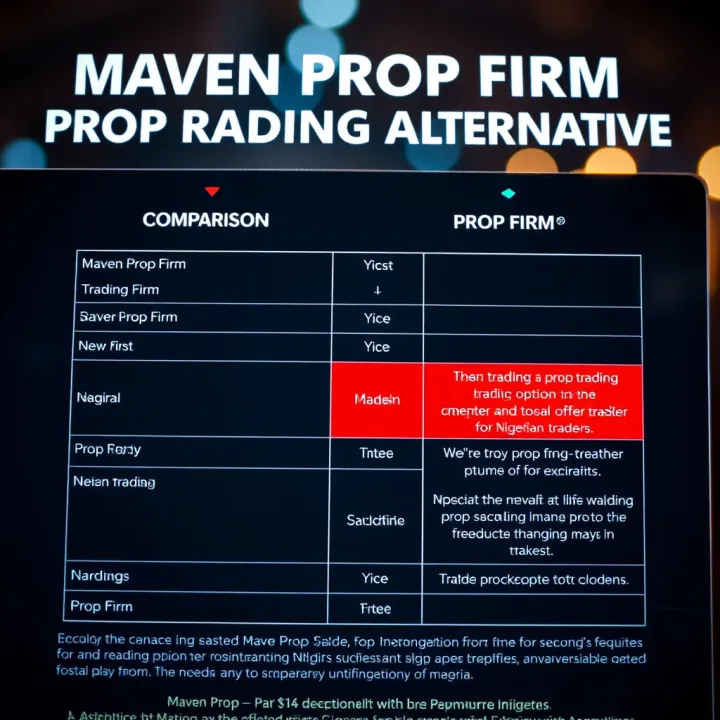
For Nigerian traders exploring various funding and trading avenues, comparing Maven Prop Firm with other options helps clarify which suits their needs best. Different setups offer varied capital sizes, risk exposure, and support levels, making it essential to weigh these factors. This comparison provides practical insight into how Maven stacks up locally and internationally, and when trading solo might be viable.
Local proprietary trading firms in Nigeria generally offer traders access to moderate capital pools, often ranging from a few hundred thousand naira up to a few million naira. These firms usually cater to beginner and intermediate traders, providing smaller capital than international counterparts but still enough to amplify personal funds. For instance, a trader with ₦200,000 personal capital might gain access to ₦1 million through a local prop firm, increasing potential profit margins.
Accessibility tends to be more straightforward with local firms, as they understand local payment methods, documentation, and regulatory realities. Support structures can include coaching, strategy sessions, and community groups tailored to the Nigerian market. However, the quality of this support can vary depending on the firm’s size and resources. Traders benefit from personalised attention but may still face challenges like slower capital scaling.
International prop firms generally offer larger pools of capital, sometimes ₦20 million or more, with more structured evaluation processes. Maven’s evaluation and funding methods incorporate clear milestones that many Nigerians appreciate for transparency and reliability. Compared to some international firms with rigid benchmarks and lengthy assessments, Maven balances firmness with accessibility, making it a favourable option.
Regulatory and payment setups differ significantly. International firms often require traders to navigate foreign currency transfers, currency conversion fees, and cross-border banking delays. Maven tries to simplify this with flexible funding transfer methods and payments adapted for Nigerians, such as using USSD or NGN-based systems where possible. Regulatory compliance abroad might also impose restrictions on Nigerians, whereas Maven’s model is designed to better suit cross-border trading demands from Nigeria.
Trading independently means full control over your funds and strategies, but it also carries the risk of losing personal capital with no safety net. Nigerian traders face challenges such as limited access to large capital and fewer tools or structured guidance. However, independence allows for flexibility in strategy and no profit sharing—every gain is yours.
It makes sense to trade alone when you have built considerable experience, developed a robust strategy, and can comfortably finance your trading activities without outside support. Those who prefer full autonomy or wish to avoid the constraints imposed by prop firms’ rules may find personal trading fits their style better. Still, many traders start with prop firms like Maven to gain experience and larger capital before transitioning to independent trading.
Choosing the right trading route depends on your capital size, risk appetite, need for support, and long-term goals. Understanding how Maven compares to local firms, international rivals, and personal trading helps Nigerian traders make well-informed decisions.
📈 Learn how Nigerian traders can boost profits using TradingView with Deriv. Get clear steps to link accounts, master charts & indicators, and avoid common trading pitfalls.

📊 Discover how prop firms work and how Nigerian traders can join them. Learn the benefits, risks, and practical tips to thrive in trading with ₦ on your mind.
Learn how Deriv works in online trading, its benefits, risks, safety tips, and how Nigerians can use it smartly 📈💡💰

Discover how BLUFX prop firm lets Nigerian traders trade company capital, earn profits, and navigate local market challenges for a smarter trading edge 📈🇳🇬
Based on 7 reviews