
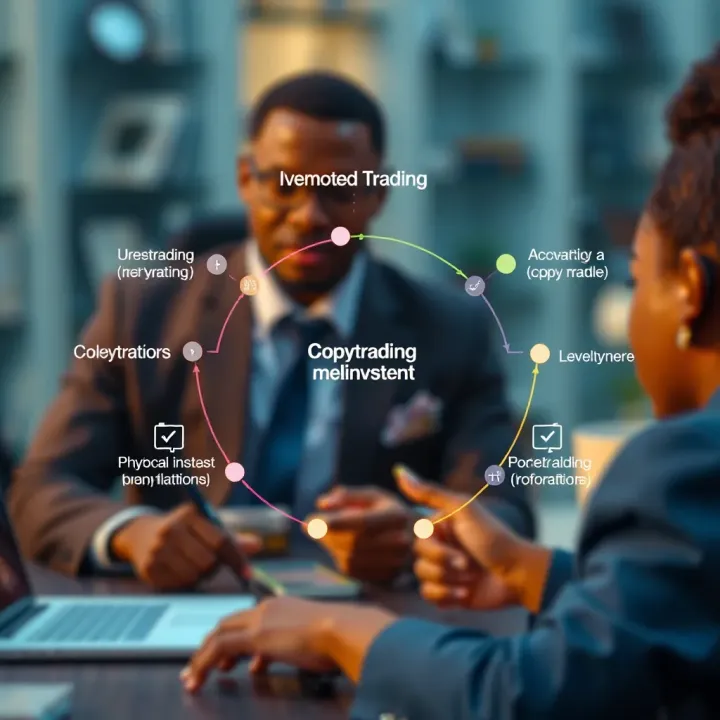
Understanding Copytrading for Nigerian Investors
📈 Discover how Nigerian investors can benefit from copytrading by automatically following top traders. Learn the pros, cons, and simple steps to start wisely.
Edited By
Benjamin Hughes
Peer-to-peer (P2P) systems enable direct connections between users or devices, allowing them to exchange data, funds, or resources without going through a central authority. Unlike traditional client-server models where a single entity controls the flow of information, P2P networks spread tasks across all participants, sharing both the workload and benefits.
In Nigeria's digital economy, P2P technology is quietly reshaping how people transact, access financial services, and even consume content. Platforms like Paystack and Flutterwave have leveraged P2P principles to allow merchants and users to send money directly through bank accounts or mobile wallets without intermediaries delaying or adding extra costs.

P2P systems reduce dependency on banks or clearinghouses, helping Nigerians transact faster and with more flexibility, especially where infrastructure is strained.
At its core, P2P connects individual nodes (users or devices) so that each participates as both client and server. For example, when you send money to a friend via a mobile payment app with P2P features, the transaction moves directly between you two, often verified by cryptographic methods or network consensus.
This contrasts with traditional finance where an intermediary like a bank authorises and processes every transaction, sometimes causing delays and fees.
One standout use of P2P tech in Nigeria is in digital lending and savings platforms such as Cowrywise and Piggyvest. These startups facilitate savings circles and lending pools, where contributors can lend or borrow from one another without relying solely on formal banks.
Moreover, P2P sharing apps for airtime or data bundles allow users to swap these resources directly. This model thrives especially in informal markets where people may lack easy access to formal banking but own mobile devices.
For traders and investors, P2P systems offer cheaper and quicker alternatives to transferring funds across states or borders, particularly useful in the informal sector. Entrepreneurs in technology and fintech are harnessing P2P to build scalable solutions that work around Nigeria's power supply challenges and fluctuating naira exchange rates.
Understanding how P2P works helps stakeholders spot viable innovations and risks in digital financial products. It also gives insights into the barriers faced, like regulatory uncertainties or security concerns.
In summary, P2P technologies form a vital backbone to Nigeria’s evolving digital economy by promoting direct, flexible, and often cost-effective transactions across sectors.
Understanding peer-to-peer (P2P) technology is essential for grasping how Nigeria's digital economy is evolving beyond traditional systems. At its core, P2P allows individuals to connect and interact directly without relying on central authorities, creating opportunities for more efficient, cost-effective transactions and resource sharing. This decentralised approach has practical advantages, especially in a Nigerian context where infrastructure challenges and trust issues with institutions persist.
Peer-to-peer technology enables two or more users to communicate or transact directly, cutting out intermediaries like banks or servers. For example, when two friends use mobile apps like OPay or PalmPay to send money without a bank acting as a midpoint, they engage in a basic form of P2P interaction. This direct link not only speeds up the process but also reduces fees often charged by middlemen.
Such direct connections also empower communities to exchange services or goods organically—imagine a neighbour lending a generator through a digital platform, bypassing formal rental agencies. This practical relevance is shaping informal markets and informal finance throughout Nigeria.
Unlike traditional systems where clients depend on a central server for data or services—imagine a bank’s server handling all transactions—P2P distributes these functions across network participants. In Nigeria, this means services can be more resilient to outages common in data centres or banking platforms, guaranteeing continuity even when central systems falter.
Moreover, in a client-server model, failures at the server affect all users, whereas P2P reduces single points of failure by spreading tasks among peers. This design suits Nigeria’s often spotty power and internet supply since users themselves help maintain the network.
Decentralisation is the backbone of P2P networks. It means no single entity controls the network; instead, all participants share responsibilities. For Nigerian fintech or online marketplaces, this ensures greater transparency since transactions are recorded across many users, making malicious manipulation tougher.
This is already visible in blockchain technology underlying cryptocurrencies that are gaining popularity locally. Each participant verifies transactions, limiting fraud risk and empowering individuals outside traditional banking.
In P2P, data and computing power are shared directly between users. For instance, when multiple users contribute bandwidth or storage for content distribution, such as Nollywood films being streamed peer-to-peer, the load doesn't rest on a single server. This approach enhances efficiency and availability.

Similarly, resource distribution means users can exchange not just data but physical assets or services via digital platforms. Consider how ride-sharing apps allow drivers to function as peers providing transport services directly to passengers, reflecting P2P principles even if intermediated by a company.
P2P networks vary by how peers organise their connections. The most common types are:
Pure P2P: Every participant acts as both client and server, no central coordination. Examples include early file-sharing apps.
Hybrid P2P: Combines central servers with peer participation. Most Nigerian fintech apps operate this way to balance control and decentralisation.
Structured P2P: Peers follow predefined rules for sharing data, improving search efficiency, useful in large networks.
Understanding these types helps entrepreneurs and investors evaluate P2P platforms’ reliability and scalability in Nigeria’s growing digital market.
Peer-to-peer technology offers practical solutions suited to Nigerian realities, promoting direct user engagement, resilience, and resourcefulness across digital and informal sectors.
Peer-to-peer (P2P) technology plays an increasingly prominent role in Nigeria’s financial sector, directly connecting borrowers and lenders, as well as facilitating seamless mobile money transfers without traditional intermediaries like banks. This approach cuts costs, increases access to credit and payments, and supports financial inclusion in a country where many remain outside formal banking.
Local startups have emerged to provide P2P lending platforms tailored to Nigerian realities. Companies like KiaKia and Aella Credit offer loans through user-friendly mobile apps, connecting individuals and small businesses with everyday lenders. These platforms use alternative data—not just traditional credit scores—to assess borrowers, making credit available to those without formal banking histories.
For many Nigerian entrepreneurs and informal traders, P2P lending serves as an accessible financing option, often quicker and less paperwork-heavy than bank loans. However, these platforms pose risks too. Users face higher interest rates compared to bank borrowing, and a lack of strong regulation means defaults and fraud are real concerns. Borrowers and lenders must carefully weigh these risks before engaging.
The main benefit is financial inclusion. P2P lending gives access to funds for people who would otherwise struggle to secure loans, such as those engaged in the informal economy or living in rural areas. It also promotes more flexibility in repayment schedules.
However, with limited regulatory oversight, users risk falling prey to scams or unfair lending terms. Some platforms may charge hidden fees, while lenders might find it hard to recover debts if a borrower defaults. The Central Bank of Nigeria (CBN) is gradually setting guidelines to protect users, but vigilance remains essential.
P2P underpins mobile money transfers, where users can send and receive money instantly using digital wallets on their phones. This peer-to-peer fund transfer capability bypasses traditional banks, reducing transaction costs and delays, which is vital in Nigeria’s cash-driven economy.
Platforms like OPay and PalmPay demonstrate this well. OPay, for instance, offers instant P2P transfers alongside services like bill payments, airtime purchase, and even transport booking, making it a multi-purpose app in daily Nigerian life. PalmPay also leverages P2P to enable quick wallet-to-wallet transactions and rewards users with incentives, encouraging their cashless drive.
These digital wallets thrive by providing convenience and financial access to millions of Nigerians without formal bank accounts. On top of that, P2P payments boost informal sector activity, enabling traders, artisans, and small businesses to transact effortlessly.
P2P technology in Nigeria’s financial services is not just about technology but about opening doors to financial opportunities for all, especially those sidelined by traditional banking.
P2P lending startups like KiaKia bring credit to underserved Nigerians
Risks include higher rates, fraud, and lack of formal regulation
P2P mobile money transfers lower transaction costs and speed up payments
OPay and PalmPay serve as prime examples of P2P-driven fintech success
Peer-to-peer (P2P) systems extend well beyond financial transactions in Nigeria, playing significant roles in content sharing and community resource exchanges. These use cases demonstrate how decentralised networks facilitate access to information and practical services, especially in areas where formal infrastructure is limited or expensive to access.
P2P technology supports the sharing of educational and entertainment content by allowing users to exchange files directly without relying on central servers. This approach helps reduce bandwidth costs and eases access to localised content, which is crucial for learners and creatives across Nigeria. For instance, students in remote areas can share study materials like past WAEC and JAMB questions through P2P networks, bypassing slow or costly internet connections.
In the entertainment sector, Nollywood filmmakers and musicians use P2P sharing to distribute films and tracks directly to their audience. This method not only speeds up content delivery but also mitigates challenges of piracy and slow downloads. Popular music from Nigerian artists circulates fast on platforms that use P2P protocols, helping artists reach fans outside conventional distribution channels. This informal sharing network contributes to the growth of Nigeria’s creative industries by making fresh content widely available.
Informal resource sharing in Nigeria often revolves around transport and tools, with individuals loaning or renting items within communities. For example, neighbours might share okadas (motorcycle taxis) or keke napep (tricycles) to ease commuting, especially in areas where public transport is erratic. Likewise, the lending of farming tools among local farmers saves money and improves productivity without each person needing to purchase costly equipment.
Digital platforms are increasingly supporting these exchanges by creating P2P marketplaces where users can list and access shared resources directly. Mobile apps targeting Nigerian users let people rent power generators, household appliances, or vehicles within their locality. These platforms reduce time wasted searching for services and boost economic activities by enabling asset utilisation, particularly within the informal sector that dominates Nigeria’s economy.
The growth of P2P sharing beyond finance reflects how Nigerian communities adapt digital tools to solve everyday problems, strengthening local economies without depending solely on traditional institutions.
These innovative uses highlight P2P systems’ versatility, promoting inclusive access and practical value that entrepreneurs and investors should watch closely as Nigeria’s digital economy evolves.
Peer-to-peer (P2P) systems carry great promise for Nigeria's digital economy, but they face distinct hurdles that slow widespread adoption. Understanding these challenges helps investors, entrepreneurs, and analysts gauge risks and spot opportunities in this evolving space. From regulation gaps to infrastructure issues, each challenge impacts trust and usability, which are vital for P2P platforms to thrive.
Unregulated P2P platforms often operate in a grey area, opening the door to fraud and scams. For instance, some lending sites promise fast cash but disappear with users’ money, leaving victims with no legal recourse. This risk deters many Nigerians who, despite the need for credit, remain wary of handing funds to unknown digital parties. The lack of clear regulatory frameworks makes it easier for fraudulent operators to exploit the system.
The Central Bank of Nigeria (CBN) and Securities and Exchange Commission (SEC) play crucial roles in overseeing digital financial services, including P2P platforms. Their involvement ensures operational transparency, consumer protection, and compliance with financial laws. The CBN, for example, mandates that P2P lenders meet certain capital requirements and proper customer verification, which reduces fraud risks. Meanwhile, the SEC scrutinises P2P investment platforms for adherence to capital market rules, ensuring funds are managed responsibly. These regulatory actions build confidence among users and attract more serious players to the P2P market.
Reliable internet and consistent power supply remain major obstacles for P2P adoption across much of Nigeria. Many rural and suburban areas suffer from poor connectivity and frequent power cuts, making it hard for users to access P2P apps or complete transactions smoothly. Even in cities like Lagos, unexpected power failures can disrupt online platforms, discouraging sustained use. This infrastructural gap limits P2P’s reach beyond urban centres where digital infrastructure is more stable.
Building user trust in P2P services requires more than just good tech; it depends on clear communication, proper customer support, and proven security measures. Many Nigerians remain cautious about digital money transfers, due to past experiences with scams or poor service. Firms that prioritise transparency, like disclosing fee structures upfront and offering responsive help desks, boost user confidence. Furthermore, platforms that partner with established banks or mobile operators often benefit from enhanced credibility. Trust grows when users see real, positive outcomes, such as flexible repayment options or prompt dispute resolution.
Without addressing regulatory gaps and infrastructure challenges, P2P systems in Nigeria risk losing users' trust and missing their potential to reshape financial access and informal trade.
Overall, these challenges are significant but not insurmountable. As regulators increase oversight and innovators improve network reliability and user experience, P2P adoption in Nigeria should accelerate, benefiting entrepreneurs, investors, and everyday Nigerians alike.
Peer-to-peer (P2P) systems are at a turning point in Nigeria’s digital economy, promising fresh opportunities and some challenges. This section outlines the innovations fuelling P2P growth and the realistic impact these developments can have on financial inclusion and support for informal businesses. Understanding these trends helps stakeholders make informed decisions and grasp how P2P might shape the market ahead.
Blockchain technology offers a secure and transparent way to manage P2P transactions, reducing dependency on central intermediaries known for delays or extra costs. In Nigeria, where trust in traditional banking can sometimes be shaky, blockchain provides a digital ledger that all parties can verify independently. For instance, platforms leveraging blockchain can ensure faster and safer cross-border money transfers for migrants sending remittances home, bypassing high fees from traditional channels.
Cryptocurrency also plays a role within P2P networks. While its adoption faces regulatory uncertainties, the underlying P2P nature of cryptocurrencies appeals to Nigerians who want control over their transactions. Some startups now use smart contracts on blockchain to automate lending processes in P2P lending platforms, ensuring automatic repayments without middlemen. Though not yet mainstream, this integration hints at a future where crypto and P2P fintech services operate hand-in-hand.
Many Nigerian fintech firms are blending P2P features directly into their platforms to expand services. Digital wallets like OPay and PalmPay don't just facilitate peer money transfers; they also provide microcredit and shared saving options grounded in P2P principles. This approach increases convenience and trust, as users operate within familiar ecosystems.
Moreover, some fintech companies are building APIs to connect P2P lending or payment systems with established bank accounts and mobile money platforms. This creates a unified experience where users can move funds peer-to-peer seamlessly while enjoying protections from regulated financial institutions. Such integrations encourage wider adoption, particularly among users who are uneasy about purely decentralised systems.
P2P systems help bridge gaps left by Nigeria's traditional banking institutions by providing easier access to credit and payment services. Many Nigerians, especially in rural areas or the informal sector, struggle to meet the documentation demands or account minimums banks require. P2P platforms allow individuals to lend, borrow, or transfer money with fewer hurdles, often via mobile phones.
As a result, smallholder farmers or artisan traders who cannot access bank loans might now tap into community-based funding through trustworthy P2P lending startups. This not only boosts personal income opportunities but also fuels grassroots economic growth away from city-centred finance hubs.
Nigeria’s informal sector employs millions but often operates outside formal financial frameworks. P2P systems support these businesses by facilitating informal savings groups (esusu or ajo) digitally and enabling quick fund mobilisation without bank delays. For example, okada riders or market traders can use fintech apps incorporating P2P transfers to settle payments instantly or invest collectively through shared lending pools.
These digital P2P tools bring greater transparency and reduce risks linked to managing cash physically. By integrating with mobile payments, informal traders also gain better records of transactions, helping them qualify for future credit or government assistance programmes. This enhanced financial visibility strengthens Nigeria’s informal economy, essential for overall job creation and economic resilience.
P2P technology is positioned not just as a niche innovation but as a practical tool to deepen Nigeria’s digital economy by empowering individuals and informal businesses directly, with less reliance on traditional banks.
The continued growth and adoption of P2P systems depend heavily on regulatory clarity, infrastructure improvements, and user education. Yet, the ongoing innovations and practical benefits underline a promising future where P2P contributes significantly to Nigeria’s inclusive economic development.
📈 Discover how Nigerian investors can benefit from copytrading by automatically following top traders. Learn the pros, cons, and simple steps to start wisely.

📈 Learn about synthetic trading, its workings, pros & cons, and how it compares to traditional methods in Nigeria's financial markets. 💼💡
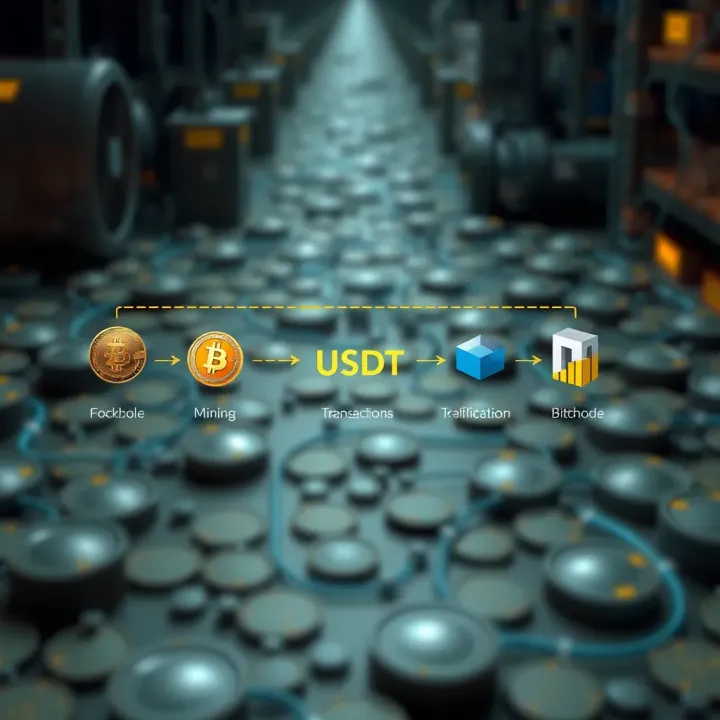
Explore USDT mining in Nigeria 🇳🇬 - how it works, key tools, risks, rewards, and practical tips to maximize your investment in this crypto space 💰

Explore how USDT mining works, its role in crypto, and key risks for users in Nigeria. Get practical tips to safely engage in digital finance with USDT! 💰🌍
Based on 8 reviews