

USD to NGN Exchange Rate and Nigeria's Economy
📉 Explore how the USD to NGN exchange rate impacts Nigeria's economy, inflation, imports, and foreign investment, shaping business and daily life.
Edited By
Elizabeth Hartley
The exchange rate between the US dollar and the Nigerian naira remains a hot topic for many Nigerians, especially traders, investors, and entrepreneurs. Understanding how the naira moves against the dollar helps people make better financial decisions—from pricing goods and services to planning imports or investments.
Several factors control this exchange rate, and it’s not just about supply and demand. The Central Bank of Nigeria (CBN) plays a major role through monetary policies, such as setting the official forex rate and regulating access to foreign currency. For instance, when the CBN tightens access to dollars via official channels, it can cause a gap that traders fill in the parallel market, often leading to a wide divergence in rates.

Economic indicators like inflation, oil prices, and Nigeria’s trade balance also shape the naira’s strength. Since oil exports account for a large chunk of government revenue and foreign currency inflows, a drop in global crude prices typically weakens the naira. Take 2020, when oil prices dipped sharply, and the naira slipped from around ₦360 to over ₦460 against the dollar on the parallel market.
External pressures matter too. Global events such as US interest rate shifts, geopolitical tensions, and dollar demand in international markets influence Nigeria’s exchange rate. For example, when the US Federal Reserve raises rates, investors may prefer holding dollars, increasing its demand and causing the naira to weaken.
Businesses and individuals who keep a close eye on these interconnected forces can better anticipate currency trends and reduce risks linked to exchange rate fluctuations.
To sum up, predicting the dollar to naira rate requires considering government policies, macroeconomic factors, and global market changes. This knowledge empowers Nigerians to plan budgets, investments, and pricing with more confidence rather than guessing blindly.
Grasping how the dollar to naira exchange rate works is essential for anyone involved in Nigeria’s economy. Whether you are a trader planning imports, a business owner budgeting expenses, or an investor watching the market, knowing what drives this rate can help you make smarter decisions. For instance, a manufacturer importing raw materials priced in dollars needs to understand that even small shifts in the exchange rate could significantly impact production costs.
The core driver of exchange rates is the balance between demand and supply of each currency. When more Nigerians want dollars for imports, travel, or investment abroad, demand for the dollar rises, pushing its price up relative to the naira. Conversely, if Nigeria’s export earnings or foreign investments flood the market with dollars, supply increases, which can lower the dollar’s value against the naira.
For example, during periods when oil revenues soar, Nigeria earns more dollars from crude sales, increasing dollars available in the market and briefly easing pressure on the naira. But when oil earnings drop, demand for scarce dollars intensifies, causing the naira to weaken.
Inflation eats away at a currency’s value, making it less attractive to investors and traders. If inflation in Nigeria climbs faster than in the United States, the naira's purchasing power drops relative to the dollar, often leading to depreciation.
Interest rates also weigh heavily. Higher rates in Nigeria can attract foreign capital, increasing demand for naira and supporting its value. Conversely, low-interest rates discourage investment inflow, often weakening the naira against the dollar.
A trade surplus, where exports exceed imports, means more dollars flow into Nigeria than leave it, which tends to support the naira’s strength. A trade deficit has the opposite effect. Since Nigeria imports many manufactured goods and exports mainly crude oil, fluctuations in oil prices directly affect this balance.
If Nigeria imports ₦500 billion worth of goods monthly while earning ₦300 billion from exports, the shortage of dollars to pay for imports pushes up the dollar price.
The Central Bank of Nigeria (CBN) manages the official exchange through systems like the Nigerian Autonomous Foreign Exchange (NAFEX) or the Special Forex Market Intervention Sales (SMIS). These rates are determined mainly by supply from authorised dealers and CBN interventions. They reflect a controlled market where access to dollars is structured, often resulting in more stable but sometimes less market-reflective rates.
For businesses registered with banks and involved in legitimate trade, the official rate is usually the reference point for transactions.
Outside official channels, parallel markets operate where dollars are bought and sold freely, often at higher prices. Economic restrictions, such as import controls or limited forex availability in banks, push people to these markets. Bureaux de change serve as intermediaries but may charge premium rates depending on supply and demand.
For many traders or individuals without access to official forex channels, the parallel rate effectively determines how much naira they need to buy a dollar.
The gap between official and parallel rates arises from supply restrictions, economic controls, and policy uncertainties. These disparities can discourage foreign investment, fuel inflation, and create opportunities for arbitrage or illicit forex trading.
For example, a company facing a ₦450 to $1 official rate but ₦560 to $1 in the black market may find it hard to budget or price products reliably, fuelling economic uncertainty. Moreover, prolonged gaps can undermine confidence in the naira and complicate government efforts to stabilise the economy.
Understanding these exchange mechanisms helps Nigerians anticipate risks and plan foreign currency needs more effectively amid a complex and often volatile forex landscape.
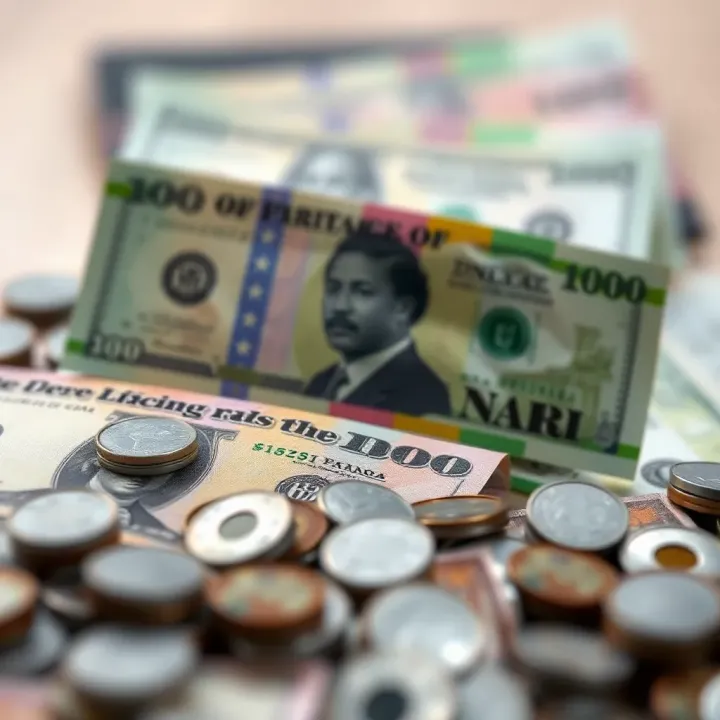
Several economic factors play a key role in determining the value of the naira against the dollar. Understanding these drivers can help traders, investors, and entrepreneurs anticipate currency movements and manage risks effectively. These factors include crude oil prices, inflation, monetary policy, and external influences such as global economic conditions and capital flows.
Crude oil remains Nigeria’s main foreign exchange earner, accounting for about 80% of export revenues and a large share of government income. Consequently, fluctuations in global oil prices directly affect Nigeria’s forex reserves and the supply of dollars at the official market. When oil prices rise, Nigeria earns more dollars from sales, strengthening forex reserves and supporting the naira's stability.
On the other hand, oil price shocks—such as sudden drops due to geopolitical tensions or OPEC decisions—can shrink forex reserves sharply. This reduces dollar availability, forcing the Central Bank to ration forex or let the naira weaken. For example, the 2020 oil price crash led to immediate pressure on the naira, pushing the parallel market rate far above the official rate.
The Central Bank of Nigeria (CBN) actively manages inflation and exchange stability through monetary policies. By adjusting the Monetary Policy Rate (MPR), the CBN influences borrowing costs, money supply, and liquidity in the economy. A hike in the MPR typically aims to curb inflation but can also attract foreign portfolio investments seeking higher yields, strengthening the naira temporarily.
However, prolonged high inflation erodes purchasing power and undermines confidence in the naira. When inflation outpaces interest rates, investors and consumers tend to prefer holding dollars, causing naira depreciation. Traders need to watch inflation trends closely, as persistent inflation often forecasts declines in naira value.
The US dollar's global strength impacts the naira directly. When the dollar rises due to factors like US economic growth or Federal Reserve interest rate increases, emerging market currencies including the naira usually weaken. This is because dollar appreciation makes imports costlier and reduces foreign investors’ appetite for Nigerian assets.
Capital flows also matter. If foreign investors pull funds from Nigerian equities or bonds, demand for naira drops, leading to depreciation. Conversely, increased foreign direct investment or portfolio inflow boosts dollar supply and supports the naira. For instance, improved foreign participation in the Nigerian NGX stock exchange has occasionally stabilised the currency.
Finally, remittances from Nigerians abroad provide a steady source of forex, cushioning naira volatility. These funds help families pay for imports, tuition, and other expenses, creating constant demand for naira exchange at authorised channels. While remittances alone won’t fix currency challenges, they do serve as a stabilising influence during forex shortages.
Economic factors like oil prices, inflation, and capital flows do not just shape exchange rates theoretically—they determine daily business costs, import prices, and investment returns in Nigeria.
Understanding these forces gives you the edge to anticipate naira movements and plan accordingly.
Government policies play a significant role in influencing the dollar to naira exchange rate. For traders, investors, and entrepreneurs, understanding these policies offers critical insights into currency behaviour and helps in anticipating market shifts. Nigerian authorities, especially the Central Bank of Nigeria (CBN), regularly intervene to stabilise the naira, and these actions affect supply, demand, and overall forex availability.
The Central Bank of Nigeria channels foreign exchange directly to authorised bureaux de change and end-users such as importers and businesses with legitimate forex needs. These sales aim to meet demand at regulated rates, limiting the excessive run-up of black market activities. For example, in the past year, the CBN allocated daily forex quotas to bureaux de change to check speculative pressures. This move helps smoothen naira liquidity and restricts pressure on official forex windows.
However, the limited forex supply through these channels sometimes creates gaps that push traders to parallel markets. Nevertheless, these interventions offer some level of market predictability, especially when consistently maintained.
The Nigerian government enforces currency restrictions by limiting forex access for certain non-essential imports. Import controls target luxury goods or items that can be sourced locally, thereby reducing forex outflow. For instance, recent bans on forex for imported rice, poultry, and automobiles aim to preserve foreign reserves while promoting local production.
Such policies affect demand for dollars because importers must seek alternatives or pay higher rates in informal markets if forex is scarce. For businesses, it means extra costs and the need to plan carefully around supply disruptions or additional charges caused by import restrictions.
CBN’s interventions directly influence naira demand by controlling forex availability and managing expectations. When forex sales rise, naira liquidity improves, helping stabilise its value. Conversely, restrictions reduce forex supply, pushing demand towards the parallel market where the naira weakens.
For example, during periods of tightened forex sales, traders often rush to black market vendors, resulting in higher parallel market rates. This increased demand pressure may lead to inflationary effects and higher costs for imported goods.
Consistent and transparent government interventions can encourage forex market stability by aligning supply closer to genuine demand.
A fixed exchange rate regime pegs the naira at a specific value against the dollar, giving predictability but requiring significant foreign reserves to defend the peg. On the other hand, a floating system lets the market determine the exchange rate based on supply and demand, allowing automatic adjustment but with more volatility.
Nigeria has experimented with both systems; fixed regimes have limited naira depreciation but strained reserves, while floating approaches increased transparency but led to wide fluctuations.
Nigeria currently operates a managed float system, where the CBN intervenes periodically to smooth extreme volatility without fully fixing the naira. The apex bank uses NAFEX (Naira Autonomous Foreign Exchange Market) rates as a benchmark, selling forex to support the naira and reduce speculative swings.
This policy balances the need for flexibility with government control, attempting to maintain some order in a market prone to shocks from oil price swings and global events.
Nigeria’s foreign exchange market involves several rates: the official NAFEX rate, the black market rate, and rates for different categories of forex users. This multiple-rate environment causes distortions, reduces transparency, and creates arbitrage opportunities.
For businesses and traders, multiple rates mean increased cost uncertainty and the risk of paying premiums for forex outside official channels. It also encourages parallel market activities, which undermine official policies and complicate accurate forecasting of the naira’s value.
The presence of multiple rates underscores the need for policy consistency and effective forex supply to unify the market and reduce inefficient currency movements.
Predicting the dollar to naira exchange rate requires a mix of analytical approaches due to Nigeria's complex economic environment. Traders, investors, and analysts rely on these techniques to make informed decisions that can mitigate losses from currency fluctuations. Understanding both fundamental and technical methods can offer practical insight into potential trends and market behaviour.
Fundamental analysis focuses on the broader economic factors affecting currency values. First, analysing macroeconomic data and country risk plays a key role. This involves examining indicators like GDP growth, inflation rates, and fiscal deficits to gauge Nigeria's economic health. For example, high inflation in Nigeria tends to erode naira purchasing power, pushing the dollar rate higher. Similarly, country risk considers political stability and policy direction — during election seasons or political unrest, predictions often anticipate heightened naira volatility.
Assessing trade and capital flow trends also provides important clues. Nigeria’s trade balance, especially oil exports versus imports, affects foreign currency availability. A drop in oil revenues usually tightens forex supply, weakening naira. Meanwhile, capital flows, including foreign direct investment and portfolio inflows, influence demand for dollars. If investors pull out funds due to perceived risks, the naira often comes under pressure. Monitoring these flows helps forecast short to medium-term exchange movements.
Using charts and historical price patterns enables traders to identify recurring trends and potential reversal points without focusing on underlying economic data. For instance, if the naira-dollar rate consistently bounces back at certain levels, these become critical resistance or support points for making trading decisions. Nigerian forex platforms and banks provide daily charts that technical analysts study for patterns like head and shoulders, or moving averages.
Speculative trading and market psychology further colour the naira’s behaviour. Sometimes, sentiments driven by rumours or policy expectations lead to sharp swings regardless of fundamentals. For example, anticipation about CBN policy changes might spur speculative demand for dollars in the parallel market, pushing up the black market rate. Such psychological factors make predictions challenging but crucial for timing entry and exit points.
Political and economic shocks add unpredictability. Sudden fuel subsidy removals, changes in trade policies, or global oil price crashes cause abrupt forex volatility. These shocks disrupt normal patterns, making forecasts unreliable until clarity returns.
Additionally, data reliability remains a problem. Informal market activities and multiple exchange rates in Nigeria create distortions that official statistics do not fully capture. For instance, the gap between official and parallel market rates complicates accurate trend estimation. Traders must therefore combine official data with on-the-ground market intel for better forecasting.
Accurate exchange rate predictions need both solid data and awareness of Nigeria’s unique market quirks. Combining fundamental and technical analyses while adjusting for volatility and data gaps offers the best chance of staying ahead in the currency market.
Understanding future trends in the dollar to naira exchange rate helps traders, investors, and businesses make informed decisions. Exchange rates affect import costs, profit margins, and investment returns. Knowing what to expect can reduce losses caused by unexpected naira depreciation or appreciation.
Recent forecasts from financial institutions provide useful signals about the naira's direction. For instance, some Nigerian banks and forex analysts predict a slight depreciation against the dollar in the next 12 months due to persistent inflation and Nigeria’s reliance on oil revenue. Such forecasts often consider CBN policies, global dollar strength, and crude oil price forecasts. By tracking these expert projections, traders can better time their forex transactions.
That said, forecasts are not infallible because Nigeria’s economy reacts to internal political events, policies, and global shocks. Yet, understanding the consensus helps financial advisors and entrepreneurs hedge risk appropriately, especially where large naira inflows and outflows are expected.
Factors likely to support or weaken the naira boil down to government actions, oil prices, and external economic conditions. High crude prices usually boost Nigeria’s forex reserves, strengthening the naira. Conversely, global dollar rallies, subsidy removals, or disruptions like power shortages increase costs, pressuring the naira downward.
Domestic inflation also eats into the naira’s value. Should inflation rise beyond the CBN’s target range, the central bank might raise interest rates, which can strengthen the naira but stifle economic growth. Understanding these push and pull effects helps businesses anticipate currency fluctuations.
Managing foreign exchange risk means planning transactions thoughtfully. Businesses importing raw materials could benefit from dollar forward contracts or using CBN-sanctioned platforms to lock exchange rates in advance. Consumers making large forex purchases should monitor official market movements, avoiding panic buying during naira dips, which often sustains black market premiums.
Optimising naira value in transactions often means diversifying payment channels. Using reputable fintech platforms like Paystack or Flutterwave allows businesses to access better rates and faster settlements. Negotiating contracts in naira where possible also reduces exposure to exchange rate swings.
Other practical tips include bulk buying during periods of favourable rates and keeping an eye on official CBN statements signalling shifts in forex policy.
Staying informed about expert forecasts and government policies is vital. It allows Nigerians to adapt their financial strategies and guard against risks posed by exchange rate volatility.
In summary, the future of the dollar to naira rate depends on a mix of global conditions and domestic policies. Awareness and strategic planning can help users navigate these changes with less stress and better outcomes.
📉 Explore how the USD to NGN exchange rate impacts Nigeria's economy, inflation, imports, and foreign investment, shaping business and daily life.

📈 Wondering if the dollar rate will rise next week? Explore economic signals, global events, and market trends affecting Nigeria's exchange rates.

📉 Curious if the dollar rate will rise next week in Nigeria? Explore key economic signs, policies, and market shifts shaping the naira-dollar exchange.

Explore Upbit Exchange 🌐 with in-depth insights on crypto options, fees, security 🔐, and its role in Nigeria's market 🇳🇬. Trade smarter today!
Based on 13 reviews