
Understanding Deviation in Forex Trading
📉 Explore how deviation affects forex trading, why it happens, and smart ways to manage risks—helping Nigerian traders make informed decisions every time.
Edited By
Sophia Clarke
Steve Mauro has made a name for himself in the financial trading circle, especially among forex traders. Known for his market timing techniques, Mauro blends classical technical analysis with a unique take on market sentiment, making his approach stand out in a crowded field.
His reputation grew widely after he put forward strategies based on what he calls ‘liquidity pools’ and ‘market geometry’. These focus on understanding where large traders move their money and how retail traders can align with these flows. Unlike mere price action methods, Mauro’s system aims to decode the underlying market mechanics that cause currency pairs to shift unexpectedly.
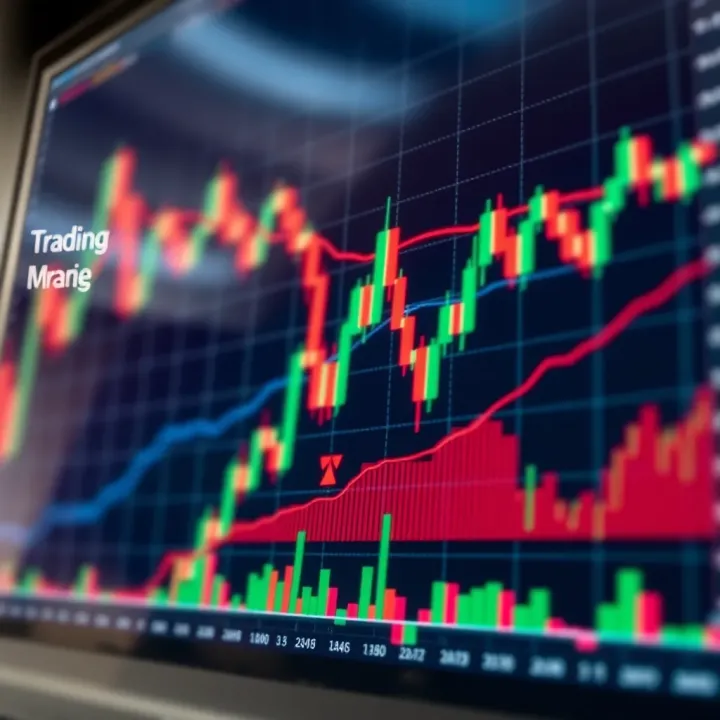
For instance, his insights on how institutional players accumulate or distribute positions before major price moves have attracted both praise and critics. Many traders find value in studying his charts showing ‘stop-loss hunts’ or ‘liquidity grabs’, which can help anticipate sudden reversals or breakouts—a skill that is useful in the volatile Nigerian forex space.
That said, his methods demand discipline and an eye for detail. In fast-moving markets like those affected by naira depreciation or unexpected CBN policy shifts, being able to spot where liquidity congregates can give traders an edge. However, it’s not a plug-and-play system; adapting Mauro’s principles needs careful backtesting and adjustment to local market rhythms.
Steve Mauro’s work reminds traders that markets are not just numbers but a battlefield of competing interests, where understanding order flow can mean the difference between loss and profit.
Emphasis on liquidity zones where stop-loss orders are clustered
Use of market geometry to project price targets
Monitoring institutional order flow rather than solely relying on indicators
Focus on timing entries and exits alongside volume spikes
While his strategies originated within global forex markets, Nigerian traders coping with naira volatility and forex scarcity can find actionable points in Mauro’s approach. Applying his methods alongside Nigerian macroeconomic indicators, such as CBN interest rates or fuel subsidy adjustments, can sharpen trade timing.
In sum, understanding Mauro’s market philosophy provides a different lens to view price action. For anyone serious about forex trading in Nigeria, this knowledge enhances market reading skills beyond textbook technicalities, blending psychology, volume, and price into a more complete picture.
This article will examine how you can incorporate these insights effectively in the Nigerian trading environment, highlighting real-world challenges and tactical adaptations.
Understanding Steve Mauro's background helps traders and investors appreciate the roots of his approach and why his strategies hold appeal today. His journey reveals lessons in persistence and adapting methods over time to suit evolving market conditions. Examining his path offers practical insights for traders aiming to navigate complex forex markets with more confidence.
Steve Mauro began his career outside the usual financial hubs. Unlike many traders who start in big banks or financial institutions, he took a more hands-on approach by learning through direct market engagement. His early years involved studying futures and commodities markets, where he developed a keen eye for market sentiment and price action.
This experience built the foundation for his later focus on the Commitment of Traders (COT) report, a weekly publication that reveals traders’ positions in futures markets. Mauro’s reliance on such data stems from his early insight that understanding what large traders do could offer clues about market direction. For Nigerian traders, this example shows how leveraging available public data can be a cost-effective way to gain an edge.
Mauro’s reputation grew mainly through his unique interpretation of the COT report. While many ignore or misunderstand this report, he popularised using it for swing trading and long-term position analysis. His approach centres on spotting shifts in large institutional trader behaviour before prices move significantly.
As forex markets tend to react to speculative positions and central bank policies, Mauro’s strategy gained traction among traders seeking clarity in volatile markets. Unlike short-term scalping, his method encourages patience and a broader view, which appeals especially to investors managing risk amid turbulent currencies like the naira.
Steve Mauro's early focus on institutional positioning reminds Nigerian traders that useful market clues often lie in data many overlook. Adopting this mindset can transform trading strategies from guesswork to evidence-based decisions.
His influence expanded with seminars, webinars, and analysis videos, where he breaks down market moves in clear terms. For many, his work demystifies complex forex mechanics, making it accessible beyond Wall Street insiders. Nigerian fintech hubs and trading communities have found his style relatable, as it balances technical analysis with fundamental insights, providing practical guidance in uncertain markets.
In summary, learning about Steve Mauro’s background and rise in forex circles offers traders a roadmap of combining research, data interpretation, and patience. This foundation is essential for understanding his later strategies and how to adapt them within particular trading environments like Nigeria’s.

Steve Mauro’s approach to market analysis stands out for its reliance on market sentiment and positioning rather than purely technical indicators. His methods focus on understanding how big players, like institutional traders and hedge funds, position themselves. This insight offers traders a clearer sense of market direction and potential reversals, which can be particularly valuable in the forex markets where volatility constantly shifts.
Mauro’s trading philosophy centres on the idea that markets move in predictable cycles influenced by the actions of commercial traders. Instead of following the crowd, he advocates studying the Commitment of Traders (COT) report to track the holdings of these big players. For example, if commercial traders are increasing long positions, Mauro might interpret this as a signal that price could rise soon. This approach helps traders make informed decisions based on market forces behind the scenes, rather than relying solely on price movements or technical setups.
He also emphasises patience and discipline, urging traders to wait for confirmations from the underlying positioning data rather than jumping into trades impulsively. This mindset aligns well with long-term trading and swing trading strategies, where understanding when market participants accumulate or distribute positions is key.
A core part of Mauro’s strategy is recognising market cycles—periods when large players accumulate or sell off their positions, causing trends and reversals. Markets rarely move randomly; instead, they have phases that repeat due to trader behaviour. For instance, after accumulation, prices typically begin a bullish phase as demand exceeds supply.
Using COT data, traders can identify these phases by observing net positions of commercial traders. When commercials hold large net shorts, it may signal that the market is near a top; conversely, large net longs might indicate a bottom. This cycle approach helps traders align their position with the dominant market force, improving the chance of profitable trades.
Focusing on market positioning allows traders to anticipate moves rather than react blindly. By understanding when big players are shifting their stance, you avoid being caught on the wrong side of the trade.
In practical terms, this means a Nigerian trader tracking the naira-dollar pair might look at global forex positioning via reports similar to COT, then combine this with local economic factors like CBN policies or naira volatility to decide when to enter or exit trades.
Mauro’s approach isn’t about predicting exact price points but about reading the market’s underlying rhythm. This offers practical benefits, especially for those keen on swing or position trading, providing a clearer edge in volatile markets.
Steve Mauro’s trading strategies have gained popularity because they tap into the underlying forces driving market movements, especially in forex. His methods go beyond simple technical analysis, blending sentiment data and market positioning to offer traders a deeper insight. Understanding these strategies helps traders identify high-probability setups, improving timing and risk management.
At the heart of Mauro’s approach is the use of the Commitment of Traders (COT) report. This weekly report from the US Commodity Futures Trading Commission (CFTC) tracks the positions of large speculators, commercial traders, and small traders in futures markets. Mauro focuses on the 'smart money'—primarily commercial hedgers—believing they hold the true pulse of market direction due to their access to insider information.
By analysing shifts in open interest and positioning within the COT report, traders can spot when major players move from bullish to bearish stances or vice versa. For example, if commercial traders start increasing their long positions on a currency pair like USD/NGN futures (if tradable), it could signal a forthcoming uptrend, encouraging traders to take a corresponding long position. This approach helps reduce guesswork, allowing traders to align with institutional flows rather than retail noise.
Another key strategy is swing trading combined with long-term positioning. Instead of chasing short-term scalp trades, Mauro advocates holding positions that ride market cycles over weeks or months. This method requires patience and discipline but results in capturing larger price moves with less stress.
Swing trading based on Mauro’s analysis involves observing the COT data alongside price action to find entry points that match a shift in the market’s broad sentiment. For instance, if the COT report suggests a weakening trend in naira against the dollar, a trader can enter a short position on the pair and hold it until the data signals a reversal. This style fits Nigerian markets well where overnight funding costs for frequent trades can be high due to naira volatility.
Using COT insights and swing trading allows you to work smarter, avoiding common pitfalls of emotional trading and jumping in too early or too late.
In practice, traders combining these techniques should track the COT report regularly, correlate it with technical setups like support and resistance levels, and enforce strict stop-loss rules. In Nigeria’s dynamic trading environment, these strategies offer a structured way to approach forex and other markets with better confidence and control.
Understanding the critiques and limitations of Steve Mauro’s trading methods is essential for anyone considering integrating his strategies into their portfolio. While his approach has gained popularity for its unique use of the Commitment of Traders (COT) report and market cycle analysis, it does not come without challenges. Recognising these downsides helps traders manage expectations and refine their tactics.
Steve Mauro’s strategies lean heavily on market cycles and reading large traders’ positions through the COT report. However, one challenge lies in the inherent volatility and unpredictability of financial markets. Sudden geopolitical events, unexpected macroeconomic data releases, or central bank policy shifts can abruptly change market sentiment, throwing off even the best-planned strategies.
For example, the naira’s wild swings due to petrol subsidy debates or fuel scarcity can cause rapid price changes in forex markets that Mauro’s cycle-based methods may not anticipate effectively. These disruptions can cause false signals or delayed reactions, leading to losses if traders rely solely on pattern predictions without adjusting for real-time events.
Moreover, high-frequency trading and algorithmic models can create market noise that confuses the clarity of COT data signals. A trader using Mauro’s method must therefore stay alert and combine it with broader risk management, such as stop-loss orders and position sizing tuned to market volatility.
Mauro’s approach, originally developed using data from major forex markets like the US Dollar, Euro, and Japanese Yen, faces limitations when applied in emerging or less liquid markets like Nigeria. The Nigerian forex market, while growing, is influenced by local factors such as Central Bank of Nigeria (CBN) policies, foreign exchange restrictions, and the informal market’s size.
These conditions can distort the typical market cycles Mauro describes. For instance, the significant parallel market for forex might not reflect in the standard COT reports, which focus on futures markets outside Nigeria. Traders in Nigeria must therefore adapt Mauro’s concepts by incorporating local data sources, such as CBN quarterly reports or interbank rates, alongside traditional COT insights.
Additionally, economic conditions unique to Nigeria—such as inflation spikes during ember months, trade imbalances, or political events like elections—may cause prolonged market trends or sudden reversals uncommon in more stable markets. This means Mauro’s timing techniques must be modified to account for these dynamics.
Effective trading in Nigeria requires a blend of global strategy frameworks like Steve Mauro’s and a sharp understanding of local market peculiarities. Ignoring local context can undermine even the best international methods.
By recognising these critiques, Nigerian traders can better decide how to tweak Mauro’s strategies and remain prepared for conditions that might otherwise lead to unexpected losses. The key is balancing Mauro’s cycle and positioning theories with on-ground realities and cautious risk controls.
Applying Steve Mauro’s trading methods in Nigeria demands a solid grasp of the local market dynamics, particularly the naira's persistent volatility. Nigerian traders stand to gain significantly by tweaking his strategies to align with our country’s peculiar economic forces. This section highlights key ways Nigerian traders can refine Mauro’s approach, balancing global insights with local realities for smarter decision-making.
Naira instability shapes how traders must approach the market. Fluctuations driven by government policy shifts, oil price swings, and foreign exchange scarcity often cause sudden, sharp price moves unlike smoother trends seen in developed currencies. This means traders relying purely on steady cycles, like Mauro’s COT-based positioning, need to prepare for more abrupt reversals. Adapting means shortening holding periods where naira pairs are involved and considering additional filters to avoid false signals. For example, when the Central Bank of Nigeria (CBN) intervenes heavily, typical forex patterns might temporarily break down, so traders ought to watch for such policy-driven moves before entering trades.
Steve Mauro’s reliance on the Commitment of Traders (COT) report offers valuable volume-backed positioning data, but Nigerian traders should not depend on it alone. Local financial indicators—such as the official and parallel market exchange rates, Central Bank FX auction results, and Nigeria-specific economic releases—provide crucial context. Combining these with COT insights creates a more holistic picture. For instance, tracking the naira interbank FX rate alongside COT can help confirm market sentiment before placing trades. Nigerian stock market movements, tracked via the Nigerian Exchange Group (NGX), alongside crude oil price changes, also offer additional clues, since these impact forex liquidity and volatility.
Managing risk in Nigeria’s trading space requires extra care because of factors like market gaps, sudden liquidity droughts, and regulatory unpredictability. Nigerian traders should:
Use tighter stop-loss orders, especially when trading naira pairs, to limit adverse moves.
Avoid overleveraging given high volatility; keeping leverage within 5:1 or lower is often safer.
Diversify trading portfolios beyond forex into commodities or equities traded locally to balance risks.
Stay updated on regulatory changes from agencies like the Securities and Exchange Commission (SEC) and CBN guidance affecting borderless capital flows.
Effective risk control tailored to Nigeria’s unique market quirks is as critical as strategy selection.
By smartly adapting Steve Mauro’s core principles to our local terrain—acknowledging naira volatility, integrating local economic data, and practising sound risk management—Nigerian traders can sharpen their edge rather than follow global models blindly.
📉 Explore how deviation affects forex trading, why it happens, and smart ways to manage risks—helping Nigerian traders make informed decisions every time.

📉 Learn how to trade volatility effectively with strategies, key concepts, and risk tips for stocks, options, and forex markets in Nigeria and beyond.

📊 Understand spread in forex trading, learn types, factors affecting cost, and get tips to manage spreads effectively for better trading decisions.

Learn how mitigation in forex trading helps protect your investments and manage risks with smart strategies for better decision-making in Nigeria's market 📉💡
Based on 6 reviews