
Understanding Synthetic Indices Explained
Explore how synthetic indices offer Nigerian traders a unique edge by operating 24/7, independent of stock markets 📈💼 Learn their risks & rewards.
Edited By
Sophie Harwood
Predictions about tomorrow shape more than just casual chats among neighbours; they guide business decisions, investment choices, and daily plans across Nigeria. From weather forecasts that affect farming activities to market trend analyses driving investment strategies, understanding how tomorrow’s scenarios are predicted offers a competitive edge.
Forecasting relies on analysing current data and patterns to estimate future outcomes. For example, in Lagos, traders often check the weather forecast before deciding on daily stock deliveries, because heavy rains mean traffic becomes even worse, and costs rise with longer journey times and increased reliance on okadas.
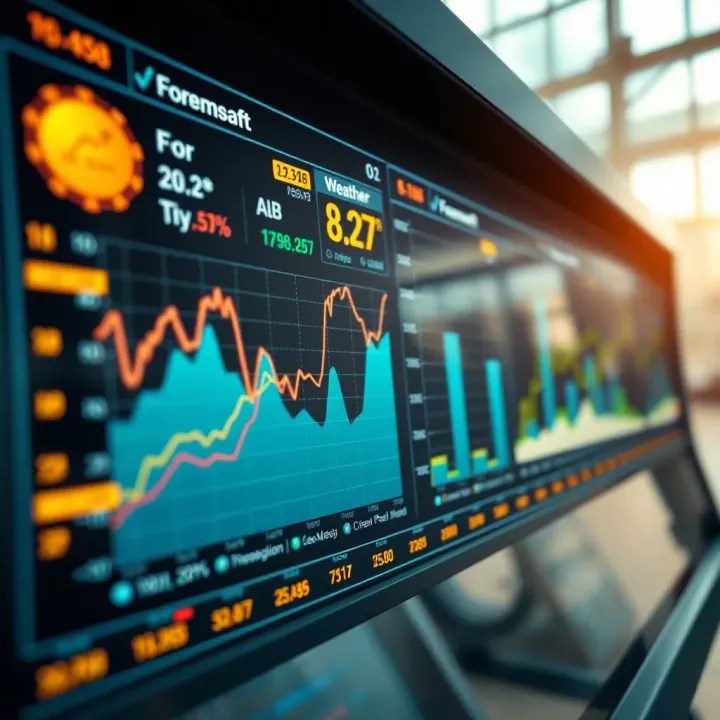
Various methods exist to make these predictions, each suited to different fields. Weather forecasts depend heavily on satellite imagery and complex models that simulate atmospheric conditions. Meanwhile, financial predictions often use historical price data and algorithms that track market sentiment, like those employed by stockbrokers tracking the NGX All-Share Index.
Accurate tomorrow predictions help reduce risk and improve efficiency in sectors like agriculture, finance, and logistics, especially in Nigeria’s dynamic economic environment.
Statistical models: analysing past data trends to forecast future values. For example, using JAMB UTME score trends to predict likely admission cut-off points.
Machine learning: software tools learn from patterns and refine predictions, such as fintech apps estimating consumer behaviour for credit scoring.
Expert judgement: insights by experienced analysts interpreting complex signals beyond data, crucial in unpredictable market movements.
Despite advances, challenges remain. Nigeria’s weather prediction accuracy can be affected by limited regional data and power outages hampering satellite ground stations. Similarly, volatile naira exchange rates complicate financial forecasts.
Still, applying these methods thoughtfully can help traders, investors, and entrepreneurs adjust strategies in real time. For instance, understanding tomorrow’s exchange rates might prompt a forex trader to hedge positions earlier, saving significant losses during ember months.
In short, grasping the approaches behind tomorrow predictions equips decision-makers with tools to navigate uncertainty more reliably, boosting confidence and outcomes in daily Nigerian economic activities.
Tomorrow predictions support critical decisions in sectors like finance, agriculture, and transport. Understanding how these forecasts come about helps traders, investors, and entrepreneurs gauge their reliability and apply them effectively. For example, a commodities trader in Lagos may rely on weather data to anticipate disruptions in supply due to rain, while an investor monitors economic indicators to project market trends.
Weather forecasts depend heavily on data from monitoring stations scattered across Nigeria and satellites orbiting above. These stations measure temperature, humidity, wind speed, and rainfall, feeding real-time information into prediction models. Satellites offer a broader view, tracking cloud movements and storm formations, crucial for forecasters predicting rainfall, harmful thunderstorms, or dry spells.
For farmers in the Middle Belt relying on rain-fed agriculture, these forecasts help plan planting dates to avoid early season drought or unexpected flooding. Urban commuters also benefit by adjusting travel plans during predicted heavy rains that could worsen Lagos traffic.
Economic forecasts use a range of data points like inflation rates, foreign exchange movements, consumer price indices, and stock market performance. Institutions like the Central Bank of Nigeria (CBN) release regular reports on monetary policy and inflation that inform predictions.
A business owner in Abuja might monitor naira exchange rate forecasts to decide when to import goods. Similarly, investors track NSE (Nigerian Stock Exchange) trends to identify the best moments for buying or selling stocks. Access to timely and accurate economic data sharpens decision-making and budget planning.
Social media platforms generate vast amounts of unstructured data, reflecting public opinion and emerging trends. Analysts now use sentiment analysis to gauge market mood, consumer confidence, or reactions to policy announcements by mining posts on Twitter, Facebook, and Instagram.
For instance, a surge in social media discussions about fuel scarcity in Lagos could prompt businesses to anticipate demand spikes and adjust fuel inventory. Sentiment analysis thus offers a near real-time pulse of the market beyond traditional economic data.
Statistical models analyse past data to identify patterns and project them into the future. They assume that similar conditions will yield similar results, which often holds true in economic cycles and weather patterns.
For example, traders might look at previous inflation trends during ember months to predict price hikes this year. While not foolproof, these models help break down complexity into understandable quantitative forecasts.
Modern forecasting increasingly uses machine learning (ML) algorithms that learn from data inputs and improve over time. ML can detect subtle patterns within vast datasets beyond human capability, enhancing accuracy and speed.
In Nigeria, fintech firms employ AI to predict customer behaviour or credit risk using transaction histories. Weather services trial AI to improve localised rainfall predictions. However, the success of these models depends on quality data inputs and continuous updating.
Despite tech advances, human expertise remains vital. Experienced analysts interpret data contextually, consider unexpected factors, and cross-check models. Their judgment helps correct biases or anomalies algorithms might miss.
For example, an economist might forecast market reaction to a government policy considering political tensions often overlooked by software. Such insights make forecasts more practical and reliable for everyday business use.
Accurate tomorrow predictions come from combining diverse data sources, advanced analytics, and seasoned human insight. This synergy equips Nigerian businesses and investors to navigate uncertainty with better clarity.

Prediction accuracy depends heavily on several factors that can either sharpen or cloud the final outlook. For traders, investors, and financial analysts, understanding these factors is key. Accuracy influences decisions on when to buy or sell assets, manage risks, or adjust strategies. Below, we explore the main elements that affect how reliably tomorrow's predictions come through.
Incomplete or outdated information can seriously weaken prediction outcomes. For instance, when economic data like inflation rates or exchange rate movements arrive late or miss some nuances, analysts may base forecasts on a partial picture. This often happens with Nigerian market data where reporting delays or informal transactions evade official capture. As a result, investment decisions might rely on outdated trends, increasing exposure to sudden shocks.
On the other hand, real-time events can swiftly overturn predictions. Rapidly changing conditions in real-time include sudden political unrest, fuel scarcity, or a flash flood during the rainy season. Such dynamics can rapidly shift market sentiment or disrupt supply chains, which static models struggle to accommodate. A trader watching the naira's daily exchange rate must factor in these immediate shifts, or risk losses due to unforeseen volatility. Hence, forecasts benefit from continuous data updates and flexible models.
Predicting tomorrow involves handling complex systems, which rarely behave in simple or linear ways. For example, Nigeria’s economy intertwines factors like oil prices, agriculture output, consumer behaviour, and government policy, each influencing the other. Most models simplify these interactions, which limits their scope. While machine learning can capture some complexity, no model fully replicates the real world’s nuance, so predictions should be seen as guides, not guarantees.
Another challenge is biases in data or algorithms. Data collected may unintentionally favour certain outcomes—say, urban economic activity over rural farming trends—skewing forecasts. Algorithms trained on biased datasets inherit these flaws, sometimes reinforcing stereotypes or underestimating key variables. Traders relying on fintech platforms must be aware that even sophisticated AI-driven tools can reflect such biases. Regular validation and diverse data sources help mitigate this problem.
Accurate tomorrow predictions hinge not just on technology, but understanding the limitations in the data and models. This awareness allows better risk assessment and smarter decision-making.
In practice, combining human insight with technical tools improves results. Financial experts frequently supplement computer outputs with local knowledge about market sentiment, upcoming policy changes, or seasonal nuances in consumption.
By recognising uncertainty and model constraints upfront, professionals can better navigate volatility and adapt strategies accordingly.
Nigeria's diverse landscape and economy make tomorrow predictions essential across various sectors. Whether you're a trader, investor, or entrepreneur, knowing what to expect tomorrow can guide decisions, reduce risks, and optimise opportunities. The most common types of predictions include weather forecasts, economic and financial market outlooks, and social trends like traffic and consumer behaviour — each holding practical value that can directly affect your daily activities and strategic planning.
Rainfall and temperature projections are crucial for Nigerians, especially in regions where agriculture dominates. Meteorological stations provide daily updates on expected rain and temperature changes, helping farmers decide when to plant or harvest crops. For instance, yam farmers in Benue State rely on accurate rainfall forecasts to plan planting dates and avoid crop loss due to unexpected dry spells or floods.
These projections also help urban residents plan daily routines, such as deciding when to commute or carry out outdoor activities. Knowing early about a heavy rain forecast in Lagos, for example, allows commuters to avoid getting caught in the notorious traffic jams worsened by flooded roads.
Impact on agriculture and daily planning goes beyond farming. Small-scale food traders at markets or mama puts can adjust their stock or storage based on weather predictions. For instance, a forecast of hot and dry weather can signal increased demand for cold drinks and perishable food items, helping vendors manage inventory efficiently.
Similarly, fishermen along the Lagos and Niger Delta coasts rely on weather forecasts to navigate safely and time their fishing expeditions. A warning of strong winds or storms enables them to avoid dangerous waters, preserving life and catching capacity.
Naira exchange rates and inflation trends directly affect business costs, pricing strategies, and investment returns for traders and investors. Predictive data on tomorrow’s naira dollar rate, for example, helps importers decide whether to lock in dollar rates today or wait. Inflation trends guide retailers in adjusting prices or planning promotions to protect profit margins.
For example, during volatile naira periods, businesses in Lagos often closely monitor exchange rate forecasts to manage forex risks, especially when buying raw materials from abroad. Inflation predictions also aid financial advisors in advising clients on savings plans that preserve wealth against escalating prices.
Stock market and business outlooks inform investors and entrepreneurs about upcoming market movements or sectoral shifts. Predictions might incorporate government policy changes, global commodity price shifts, or corporate earnings reports expected next day. This enables stock traders to make timely buy or sell decisions.
For instance, a forecast of positive movement in the oil and gas sector stocks might encourage portfolio rebalancing to capture gains. Business owners can also plan product launches or marketing campaigns when economic outlooks appear favourable, reducing the risk of poor reception.
Traffic and transportation patterns predictions are especially vital for people in busy cities like Lagos, Abuja, and Port Harcourt. Forecasts consider past traffic data, scheduled events, and weather to estimate congestion levels on major roads tomorrow. This information helps commuters, ride-hailing drivers, and logistics companies plan routes and timings.
For example, predicting heavy traffic along Lekki-Epe Expressway during ember months guides okada riders to avoid certain spots, improving efficiency and safety. Public transport operators can also adjust service frequency to meet expected demand.
Consumer behaviour during ember months forecasts capture spending trends in the critical last quarter of the year, when Nigerians typically spend on festivities, school fees, and travel. Businesses can use such predictions to stock adequate merchandise or tailor promotional offers targeting festive shoppers.
Retailers in markets like Balogun in Lagos or Ariaria in Aba prepare for surges in demand for aso ebi fabrics and electronic gadgets by analysing expected consumer behaviour. Entrepreneurs planning events or services can also time launches for maximum impact during these peak periods.
Tomorrow predictions are more than numbers; they are tools that empower Nigerian traders, investors, and planners to act with foresight amid uncertainty.
Understanding these types of predictions will enable you to navigate daily challenges and seize opportunities ahead.
Tomorrow predictions play an essential role in guiding decisions across agriculture, business, and personal life in Nigeria. Accessing accurate forecasts helps stakeholders anticipate challenges and adapt strategies promptly. This section unpacks practical applications that demonstrate how forecasting informs everyday choices.
Farmers rely heavily on weather forecasts to decide when to plant or harvest crops. For instance, knowing the likely start and end of the rainy season enables farmers in locations like Kaduna or Benue to optimise planting schedules, reducing the risk of crop failure from unexpected drought or flood. These schedules improve yield predictions and help smallholders align activities to market demands, ensuring better income.
Fishermen along the Lagos coast or the Niger Delta use weather predictions to plan safe fishing trips and avoid sudden storms. Forecasts indicating rough seas or heavy rain help them decide when to suspend activities or adjust routes. Such planning safeguards lives and prevents loss of equipment, while also improving catch productivity by choosing optimal weather windows.
Businesses that depend on imports, like supermarket chains or electronics retailers, watch exchange rates and port congestion forecasts to manage inventory effectively. For example, a retailer in Lagos might delay stocking certain goods if tomorrow's prediction points to fuel scarcity, which could disrupt transport logistics. Adjusting orders and delivery schedules this way helps maintain stock levels while avoiding excess holding costs.
With frequent power outages, many Nigerian businesses rely on generators. Predicting weather conditions like high temperatures or humidity spikes informs budgeting for increased fuel consumption. For instance, a barbing salon in Abuja may allocate extra funds for fuel during dry periods when generator use intensifies. Such budgeting controls operational expenses and prevents unexpected cash flow issues.
Planning weddings, funerals, or send-forth parties (‘owambes’) depends heavily on weather forecasts in Nigeria’s diverse climates. Choosing a dry day in rainy seasons ensures everything runs smoothly. Similarly, travellers schedule trips to avoid peak traffic or rainy conditions, reducing delays. This foresight saves time and money, especially in cities with notorious traffic like Lagos.
Communities and individuals use predictions to prepare for heavy traffic or hazardous weather. For example, anticipating ember months' increased road congestion helps drivers leave earlier or avoid certain routes. When forecasts warn of severe storms, residents secure property and avoid risky movements. These practical actions reduce accidents and property damage, enhancing overall safety.
Accurate tomorrow predictions empower Nigerians to make informed choices that save costs, protect lives, and improve productivity across multiple sectors.
By integrating forecasts into everyday decisions, stakeholders from farmers to entrepreneurs can navigate uncertainties with greater confidence and resilience.
Accurate tomorrow predictions rely heavily on solid data and robust technology. However, several challenges limit their effectiveness in Nigeria, particularly due to gaps in data availability and infrastructure weaknesses. Understanding these challenges is vital for traders, investors, and analysts who depend on predictions to make informed decisions.
Access to up-to-date, real-time data remains a major hurdle. Many regions in Nigeria, especially rural and remote areas, suffer from poor sensor coverage and limited communication networks. For instance, weather data monitoring can be patchy outside urban centres, resulting in forecasts that lag behind actual conditions. This delay affects farmers who depend on timely rainfall information to plan planting or harvesting.
Additionally, real-time financial market data can be inaccessible or costly for smaller investors. Limited broadband penetration and unreliable electricity infrastructure often disrupt digital platforms. Such constraints hinder swift decision-making in fast-moving markets where seconds count.
Developing and maintaining advanced forecasting systems require substantial investment in technology and skilled personnel. Many Nigerian institutions face budget shortfalls, limiting their ability to acquire modern equipment or train experts in cutting-edge prediction models. For example, deploying machine learning-based tools demands not just software but also continuous data input and processing power, which may not be readily affordable.
Moreover, infrastructural weaknesses like erratic power supply create operational challenges. Companies may resort to generator use, which increases cost and complexity. These bottlenecks delay updates and restrict the expansion of prediction services to underserved sectors.
Smartphone usage in Nigeria has surged, making mobile platforms key to spreading forecasting information. Several startups now offer mobile apps that deliver daily market outlooks, weather forecasts, or transport predictions directly to users’ phones. For instance, applications like Carbon and PalmPay integrate financial forecasts with payment services, helping users plan expenses based on expected market trends.
These mobile tools enhance accessibility by bypassing traditional infrastructure barriers and providing real-time updates even in less connected areas. Traders and entrepreneurs can receive actionable insights while on the move, supporting quick adjustments to strategy.
Combining artificial intelligence with Nigeria’s abundant local knowledge promises richer, more relevant forecasts. AI algorithms can analyse large datasets but may miss nuances unique to Nigerian contexts—such as cultural festivals or local market peculiarities. Incorporating insights from community elders, market women, or agricultural experts into AI models can refine predictions.
Such hybrid systems improve accuracy and trustworthiness. For example, merging satellite crop data with local farmers’ observations can better predict harvest times or yield quality. This approach also empowers communities, making prediction tools more participatory and context-sensitive.
Addressing data and infrastructural challenges through emerging technologies will transform prediction services, making them more reliable and inclusive for Nigeria’s diverse economy.
Effective tomorrow predictions in Nigeria hinge on overcoming data gaps and harnessing innovative tech, ensuring that traders, investors, and decision-makers have the right information when it matters most.
Explore how synthetic indices offer Nigerian traders a unique edge by operating 24/7, independent of stock markets 📈💼 Learn their risks & rewards.
📊 Understand margin in business & finance—types, calculations, risks, and trading roles explained. Learn how effective margin management boosts profitability.

💰 Learn how withdrawal processing works, including steps, timing, security, and tips to avoid delays in banks and online platforms in Nigeria.

📈 Learn about synthetic trading, its workings, pros & cons, and how it compares to traditional methods in Nigeria's financial markets. 💼💡
Based on 9 reviews