
Understanding CFD Trading in Nigeria
Learn how CFD trading works in Nigeria 🇳🇬, including benefits, risks, and tips for managing investments wisely in the ₦-zone. Ideal for savvy Nigerian investors!
Edited By
Emily Cartwright
Derivative trading might sound complex, but it plays a significant role in modern investing, especially for Nigerian investors looking to manage risk or capitalise on market movements without owning physical assets. Simply put, derivatives are contracts whose value depends on an underlying asset like shares, commodities, currencies, or even indexes.
In Nigeria, derivative trading is gradually gaining ground as financial markets mature and investors seek more sophisticated tools. While many investors stick to buying stocks or fixed-income securities, incorporating derivatives can add an extra layer of flexibility.
For example, a trader expecting the price of Nigerian crude oil to fall might use a futures contract to sell at today's price, locking in gains or limiting losses without hauling barrels of oil. Similarly, a farmer in the Middle Belt might use commodity options to hedge against poor harvest prices during the ember months.
Derivatives let you speculate or hedge price risks without owning the actual asset, saving capital and opening strategic opportunities.
Key benefits for Nigerian investors include:
Risk management: Hedge against adverse price movements affecting stocks, commodities, or foreign exchange.
Leverage: Control larger market positions with smaller capital outlay, though this involves higher risk.
Diversification: Access assets or markets that might be hard to trade directly.
However, derivative trading is not magic; it requires understanding contract terms, market behaviour, and potential risks. Losses can be rapid and significant if positions move unfavourably.
In the following sections, we'll break down types of derivatives, how they fit into Nigeria’s financial landscape, and practical strategies investors can use to protect investments or seek profits in volatile markets. This is especially useful as Nigerian markets face currency fluctuations, inflation concerns, and global commodity price shifts.
Being equipped with this knowledge can help you approach derivative trading confidently, knowing how to apply these instruments smartly within your overall investment plan.
Understanding what derivative trading means is essential for any Nigerian investor aiming to navigate the financial market beyond conventional stocks and bonds. Simply put, derivative trading revolves around contracts whose value is derived from an underlying asset like commodities, currencies, equities, or interest rates. These contracts allow investors to speculate on or hedge against price movements without owning the actual asset.
Derivative trading involves agreements between parties to buy or sell an asset at a future date or under specific conditions. For example, a Nigerian farmer growing cocoa might use a futures contract to lock in a selling price now, avoiding losses if global prices drop during harvest. On the other hand, a trader in Lagos may buy an option contract granting the right—but not the obligation—to purchase shares of a company later, benefiting if the shares rise in value.
These instruments provide flexibility by separating ownership from the right to profit from price changes. Derivatives come in several forms, including futures, options, swaps, and forwards. Each serves different purposes, such as risk management or speculative gain. Their core value lies in allowing investors to manage exposure to price risks without committing large capital upfront.
Derivatives don’t require you to hold the actual asset; instead, you can profit or protect yourself from price changes using small deposits called margins.
Unlike traditional investments where you buy and own assets outright—such as purchasing stocks or real estate—derivatives represent contracts tied to these assets but do not entail ownership. This distinction makes derivatives unique tools for Nigerians who want more control over their risk and exposure.
Traditional investments usually require full payment upfront and profits depend entirely on asset appreciation or income generation. With derivatives, you can participate in price fluctuations using smaller capital, thanks to leverage. However, leverage also amplifies potential losses, which demands careful strategy.
Moreover, derivatives are often short-term instruments demanding active management, while traditional investments may be held long-term. For instance, a Lagos-based investor speculating on crude oil prices through futures must closely track market shifts and close positions on time, unlike someone holding shares of a blue-chip company for dividend income over years.
In summary, derivative trading offers a route to manage financial risks and pursue profit opportunities with instruments designed to respond quickly to market moves. This approach is particularly relevant for Nigerian investors facing a volatile naira, fluctuating oil prices, or uncertain economic conditions. Understanding these differences helps you decide when derivatives fit your portfolio and how to avoid pitfalls common to leveraged trades.
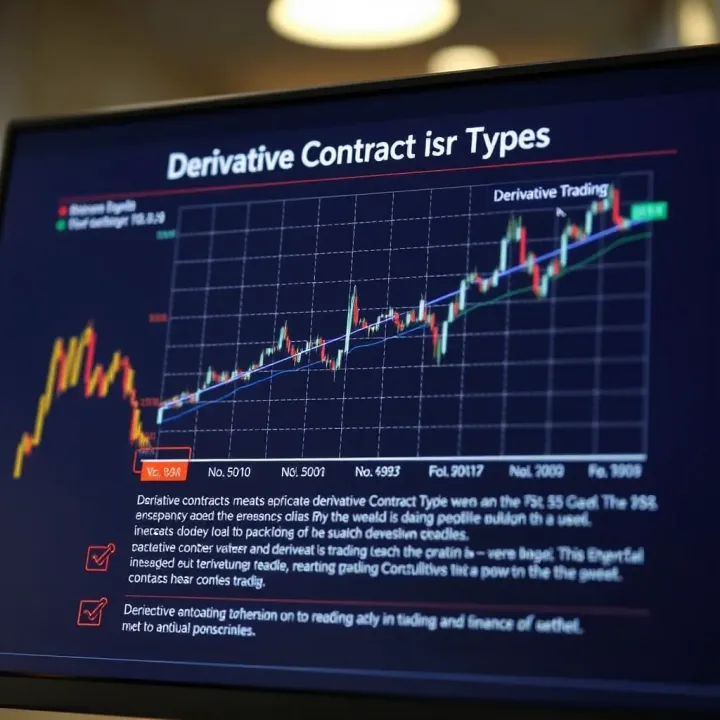
Understanding the common types of derivatives is essential for Nigerian investors who want to navigate this market effectively. Each derivative instrument serves different purposes, such as hedging against risk or capitalising on price fluctuations without owning the underlying asset. In practice, derivatives provide flexible tools for managing exposure to commodities, currencies, stocks, and interest rates relevant to Nigeria's diverse economy.
Futures contracts are agreements to buy or sell an asset at a predetermined price on a future date. These contracts are widely used to hedge against price volatility, especially in commodities like crude oil and agricultural products, which are crucial to Nigeria's economy. For instance, Nigerian oil producers can lock in a futures price to protect against sudden drops in crude prices, safeguarding revenues. Futures are standardised and traded on exchanges, which adds liquidity and reduces counterparty risk. However, because of leverage, traders must monitor margin requirements closely to avoid losses exceeding their initial investment.
Options give the buyer the right, but not the obligation, to buy or sell an asset at a specified price before a set expiry date. In the Nigerian context, options are valuable for investors seeking to limit downside risk while keeping upside potential open. For example, a farmer anticipating a fall in maize prices might buy a put option to sell at a guaranteed price, thus avoiding loss from price drops. Unlike futures, options require the payment of a premium upfront, which is the maximum loss the buyer faces. Sellers of options, often called writers, take on more risk and thus can earn premiums as income. Options trading demands careful strategy and understanding of terms like strike price, expiry, and intrinsic value.
Swaps and forwards are private contracts tailored between parties, usually outside formal exchanges, to suit specific risk management needs. Forward contracts resemble futures but are customised to the buyer and seller’s requirements. Nigerian importers, for example, often use forwards to lock in exchange rates for US dollars or Euros, shielding their operations from naira volatility. Swaps, on the other hand, involve exchanging cash flows to manage interest rates or currencies. A common instance is a company swapping fixed-rate loan payments for variable rates to take advantage of expected interest rate reductions. These instruments carry higher counterparty risk since they are over-the-counter (OTC) deals, making strong contracts and credible counterparties essential.
Nigerian investors should carefully evaluate each derivative instrument’s suitability based on their exposure, market knowledge, and risk tolerance to maximise benefits while managing potential downsides.
In summary, futures, options, swaps, and forwards each offer distinct advantages that fit different investment or hedging needs. Knowing how these derivatives operate within Nigerian markets, especially in sectors like oil, agriculture, and foreign exchange, helps investors use them smartly to enhance their portfolio performance and protect wealth against economic uncertainties.
Derivative trading has gradually carved out a place in Nigeria’s financial markets, offering investors new ways to manage risk and access opportunities beyond traditional stocks and bonds. For Nigerian investors, understanding how derivatives function locally is key to navigating our market's volatility and economic uncertainties. These instruments serve not just speculative aims but practical needs like hedging against currency devaluation or commodity price shifts.
Although still developing, the Nigerian Stock Exchange (NSE) has started to embrace derivative products, particularly futures contracts. These allow investors and producers to lock in prices for securities or commodities, helping reduce exposure to price swings. For example, a cocoa exporter facing fluctuating international prices can use futures contracts on the NSE to secure a guaranteed selling price.
The NSE's introduction of such derivatives is a response to calls for market sophistication, providing traders and hedgers with tools to better manage risk. However, liquidity remains a challenge; fewer participants mean wider bid-ask spreads and less price stability. That said, gradual improvements in regulatory frameworks and technology platforms are encouraging more players to consider derivatives as part of their portfolio strategies.
Nigeria’s heavy reliance on oil revenue and the naira's well-documented volatility expose many investors and businesses to significant risks. Derivatives act as a shield against these uncertainties. For instance, local manufacturers that import raw materials can use currency derivatives to hedge against naira depreciation. By locking an exchange rate in advance, they avoid sudden spikes in costs that might otherwise erode profit margins.
Similarly, commodity traders dealing with products like crude oil, cocoa, or palm oil benefit from futures and options contracts to stabilise earnings despite price fluctuations on global markets. Such risk management tools are particularly useful now, as Nigeria navigates inflationary pressures and external shocks, including fluctuating oil prices and forex scarcity.
Derivative trading isn’t just for big banks or hedge funds in Nigeria – small and medium-sized enterprises also stand to gain by using these instruments to manage risks inherent in our economy.
To sum up, derivative trading in Nigeria provides practical mechanisms for investors and businesses to mitigate financial risks linked to currency swings and commodity prices. While still growing, these markets hold the promise of deepening Nigeria's financial ecosystem and offering investors sharper tools to protect and grow capital amid local and global uncertainties.
Derivative trading presents opportunities, but it also comes with distinct risks and challenges that every Nigerian investor should understand. The rapid price changes in underlying assets and the use of leverage can magnify both gains and losses. Being aware of these factors helps investors manage risk better and avoid costly mistakes.
The foundation of derivative trading lies in price movements of assets like stocks, commodities, or currencies. However, Nigerian markets can be quite volatile due to factors such as exchange rate fluctuations, political events, and global commodity price swings. For example, the naira's instability against the dollar often influences derivatives linked to forex or crude oil prices.
Leverage magnifies exposure by allowing traders to control larger positions with smaller initial capital. While this can boost profits, it also magnifies losses. Imagine a trader using ₦500,000 margin to enter a futures contract worth ₦5 million. A 5% adverse move could wipe out the entire margin and leave the trader owing more, especially if stop-loss orders are not in place.
Because of leverage, derivative trading demands strict risk management. Traders should set limits on exposure, use hedging strategies sensibly, and remain alert to market news. Tools like margin calls and position limits exist to help, but buyers must understand their responsibilities thoroughly to avoid severe losses.
Derivative trading is still developing in Nigeria’s financial markets. The Securities and Exchange Commission (SEC) regulates capital market activities, including derivatives to an extent. However, regulatory frameworks specific to derivative products are not yet fully mature, which creates ambiguity that investors must navigate carefully.
For instance, the Nigerian Stock Exchange (NGX) introduced futures contracts on some blue-chip stocks and indices, but the market for these remains thin compared to other global exchanges. Traders should ensure they deal through SEC-licensed brokers and platforms to mitigate risks related to fraud or malpractice.
Besides the SEC, the Central Bank of Nigeria (CBN) influences forex-related derivatives through its exchange rate policies and capital controls. Sudden shifts in CBN policies can affect derivatives linked to foreign currencies, underscoring the need to monitor policy statements regularly.
Investors must always verify the legal status of derivative products and maintain compliance with tax and reporting obligations governed by the Federal Inland Revenue Service (FIRS). Ignorance of regulatory requirements may lead to penalties or invalid contracts.
In light of these challenges, diligent research and a cautious approach are vital. Nigerian investors should keep abreast of evolving rules and trade only through reputable institutions to protect their capital and gain sustainable returns from derivatives.
Mastering these risks will empower investors to use derivatives as powerful tools rather than mere gambles. Next, practical strategies and platform choices will help you navigate Nigeria's unique market environment wisely.
Navigating derivative trading in Nigeria requires more than just understanding concepts; practical strategies tailored to local market conditions are essential. Traders need clear approaches that address Nigeria’s unique financial environment—challenges like naira volatility, limited market depth, and regulatory nuances. This section focuses on hands-on methods to hedge risk and speculate effectively while choosing suitable trading platforms.
Hedging protects your investments against adverse price movements, a key benefit in Nigeria’s currency and commodity markets. For instance, a Nigerian exporter expecting US dollars might use currency futures or options contracts to lock in favourable exchange rates, shielding against naira depreciation. Similarly, farmers or agribusinesses can hedge commodity price risks using futures to maintain stable earnings despite global price swings.
Speculation, on the other hand, aims to profit from price changes but carries higher risks. A speculator might buy options on oil futures in anticipation of rising prices due to geopolitical tensions affecting supply. However, this approach demands a strong grasp of market signals and risk tolerance. Nigerian traders must balance ambition with caution, especially given the leverage involved in derivatives, which can multiply gains and losses.
To succeed, blend both hedging and speculation based on your risk appetite and market outlook. For example, a business can hedge currency risk on expected payments while dabbling in speculative contracts to capitalise on short-term trends. Always monitor economic indicators, CBN policies, and global events affecting Nigeria’s markets to time your trades better.
Selecting a reliable brokerage with access to Nigerian derivative markets is vital. Not all firms offer derivative trading or have the required licences from the Securities and Exchange Commission (SEC) Nigeria. Look for brokers registered with SEC and recognised by the Nigerian Stock Exchange (NGX).
Platforms like NGX’s futures market provide transparent pricing and standardised contracts. Also consider brokers offering user-friendly interfaces, strong customer support, and educational resources to help you understand contract specifications and fees. International platforms that serve Nigerian clients may provide more diverse derivatives but watch out for currency conversion costs and regulatory compliance.
Beware of hidden charges such as high commissions, inactivity fees, or poor spreads that can erode profits. Make sure the brokerage provides efficient settlement processes and adheres to Nigerian banking and anti-money laundering regulations. For instance, some traders prefer brokers who facilitate BVN (Bank Verification Number) integration for fast account verification and deposits.
Choosing platforms and strategies wisely can be the difference between profit and loss. Nigerian traders benefit from using brokers who understand local market conditions and provide tools that make derivative trading manageable and transparent.
With these practical approaches, Nigerian investors can better manage risks, take advantage of market movements, and navigate Nigeria’s growing derivative landscape confidently.
Learn how CFD trading works in Nigeria 🇳🇬, including benefits, risks, and tips for managing investments wisely in the ₦-zone. Ideal for savvy Nigerian investors!
📈 Learn about synthetic trading, its workings, pros & cons, and how it compares to traditional methods in Nigeria's financial markets. 💼💡
📈 Learn what trading signals are, how Nigerian investors can apply them effectively, and the risks to watch out for in this practical guide to smarter trading.
📈 Learn how Nigerian investors can use copy trading to mirror expert moves, manage risks, and boost potential gains hands-free. Start smarter investing today!
Based on 7 reviews