

Understanding Derive Login: Uses and Security in Nigeria
🔐 Understand derive login in Nigerian software apps: how login details are created programmatically, its role in user verification, and best security tips to protect users.
Edited By
James Whitaker
The natural logarithm function, written as (\ln(x)), is a fundamental part of maths that traders and investors often encounter when analysing growth or decay patterns. Whether you are managing investment portfolios or modelling business growth, understanding how to derive this function's rate of change is key to making informed decisions.
The derivative of (\ln(x)) tells us how quickly the value of (\ln(x)) changes as (x) changes. This insight is especially useful in financial contexts, such as calculating returns on investments where growth isn't linear but exponential or logarithmic.
Here’s a quick rundown before diving in:
(\ln(x)) is the inverse of the exponential function (e^x).
The derivative of (\ln(x)) with respect to (x) measures how sensitive the log value is to changes in (x).
Knowing this derivative helps in optimising financial models that naturally form logarithmic relationships, such as price elasticity, compound interest, and risk assessment.
For example, if a stock price follows a pattern that grows exponentially, its logarithm grows linearly. Understanding and differentiating (\ln(x)) allows investors to gauge percentage changes and volatility more accurately.
Recognising that (\ln(x)) only applies to positive (x) is crucial. This limitation means that when applying derivatives in practice, ensure your variables remain positive, a common caveat when analysing real-world data like sales volumes or market indices.
In the sections to come, we will walk through the step-by-step derivation of the natural logarithm function’s derivative, link it to practical cases such as financial forecasting in Nigeria, and clarify some common challenges in interpreting these results. This knowledge will empower you to sharpen your analytic tools and improve decision-making based on growth dynamics.
Stay with me as we unpack this essential mathematical concept in a clear and practical manner.
Understanding the basics of the natural logarithm function is key when learning how to derive its derivative. The natural logarithm, denoted ln(x), is more than just a mathematical curiosity—it’s a tool that appears in many practical fields like finance, economics, and natural sciences. Getting familiar with its definition, domain, range, and properties helps you handle the function confidently, especially when applying it to real-world problems.
The natural logarithm function ln(x) is the inverse of the exponential function with base e, where e is approximately 2.71828. This means if you have y = ln(x), then x = e^y. This inverse relationship is the backbone of many mathematical manipulations involving growth and decay. Practically, it helps reverse the effect of exponential growth—such as calculating the time it takes for an investment to double if it grows at a continuous interest rate.
For example, if your ₦100,000 investment grows according to the formula A = 100,000 * e^(rt), using ln lets you solve for t, the time it takes to reach a target amount.
The function ln(x) is defined only for positive values of x (x > 0). This restriction originates from its inverse nature—since e^y always produces positive results, ln(x) cannot take zero or negative inputs. This matters in practice because when working with real data—like prices, populations, or quantities—you ensure inputs to ln(x) are positive to avoid errors.
The output, or range, of ln(x) is all real numbers from minus infinity to plus infinity. That means ln(x) can return any number, positive or negative, depending on the input.
Key properties of ln(x) make it easier to differentiate and work with. For instance:
ln(ab) = ln(a) + ln(b): Turning multiplication inside the log into addition outside simplifies expressions.
ln(a/b) = ln(a) - ln(b): Divisions become subtractions.
ln(a^n) = n * ln(a): Powers inside translate to multiplication.
These rules help break down complex ln expressions, especially in financial maths or when modelling processes like compound interest or population growth.
The derivative of ln(x) gives us a rate of change—a fundamental concept in calculus. Knowing how fast ln(x) changes with x allows traders, analysts, and entrepreneurs to understand growth behaviour in continuous models accurately. For example, in describing marginal growth rates or elasticity, the derivative shows sensitivity to small changes.
Access to the derivative lets you analyse how quickly an investment or a market indicator moves without relying only on discrete points. It offers a continuous snapshot, which is essential when timing decisions or creating algorithms for trading.
The ability to differentiate ln(x) empowers you to handle continuous growth problems and interpret economic or financial changes clearly.
In Nigeria’s financial sector, continuous compounding interest often uses the formula A = P * e^(rt). By differentiating ln(x), you can find the instantaneous rate of change for the investment value or the speed at which inflation impacts prices. When inflation rises gradually, the ln derivative helps measure subtle effects over time.
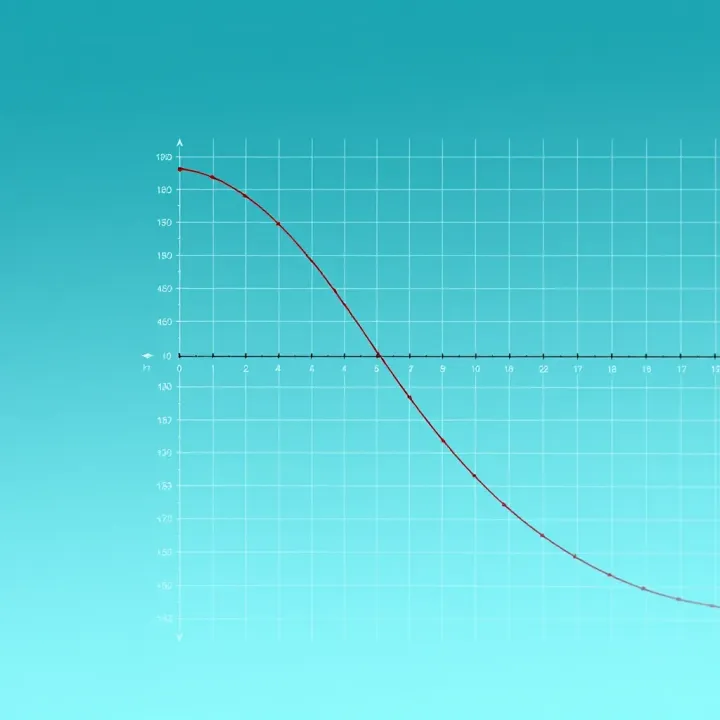
Similarly, in natural growth models like population increase in Lagos or crop yields in farm lands, ln(x) derivatives track relative growth. Instead of absolute changes, which might be misleading due to large base numbers, the derivative tells the percentage rate, which is much more insightful for decision-making.
By grasping these basics and appreciating why the derivative matters, you gain a solid foundation to explore further steps in differentiating the natural logarithm function and applying it to your economic and financial analyses.
Breaking down the derivative of the natural logarithm function helps you grasp not only the mechanics but also why it matters. For traders, investors, and analysts, understanding this derivation sharpens your ability to handle continuous growth computations and sensitivity analysis in financial models. Clarity on each step reduces errors and lets you apply the derivative confidently in real-world scenarios.
For example, in stock price models, small time moves must be analysed accurately; this limit approach grounds that analysis in precision.
Considering y = ln(x) and rewriting as exponential form: Implicit differentiation starts by expressing ( y = \ln(x) ) as ( e^y = x ). This equivalence links logarithms and exponentials clearly. For practical use, this allows you to switch between forms depending on which makes differentiation simpler.
This step is particularly relevant when modelling financial variables that transform naturally through exponentials, such as discount factors or inflation indices.
This approach elegantly confirms the derivative of ln(x), which assists analysts in verifying formulae and avoiding mistakes when working with layered logarithmic or exponential financial functions.
Mastering these derivation techniques equips you with the confidence to apply the natural logarithm derivative in diverse financial analyses, from growth rates to risk assessment calculations.
Differentiating the natural logarithm function, ln(x), is straightforward when applied to simple expressions. However, traders, investors, and financial analysts often encounter challenges due to domain restrictions and more complex functions. Knowing these pitfalls helps avoid errors in calculations—especially when working with models involving continuous growth or compounding returns common in Nigeria's financial sector.
The natural logarithm function ln(x) requires x to be strictly positive because ln(x) is undefined for zero or negative values. This restriction exists since logarithms represent exponents: you cannot raise e (Euler’s number) to a power and get zero or negative results. In practical terms, this means when differentiating ln(x), the domain limits your input to positive numbers only.
These constraints have real consequences. For instance, analysts working on stock price modelling or inflation rates cannot apply ln(x) when the values dip to zero or go negative without appropriate adjustments. Attempting such could yield nonsensical results or cause your mathematical model to crash.
In financial models, some variables might take zero or negative values, such as net profit during a loss-making period. If you try to differentiate ln(x) where x ≤ 0, it violates domain conditions and produces errors. Hence, professionals often either shift the variable by a positive constant or use transformations that keep the input within valid ranges.
For example, in investment returns, where negative returns occur, analysts might examine ln(1 + x) instead of ln(x) to keep the expression valid since 1 + x stays positive even when x is slightly negative. Recognising and handling these domain restrictions is vital to avoid mistakes in forecasting and reporting.
Chain rule application is pivotal when working with composite functions inside the logarithm. Instead of ln(x), you might come across ln(g(x)), where g(x) is some function of x. Differentiation here requires applying the chain rule: first differentiate the outer ln function, then multiply by the derivative of the inner function g(x).
This technique is important in many Nigerian business applications, such as calculating the elasticity of demand where price dependence is nested inside logarithmic terms. Misapplying the chain rule leads to incorrect slopes or growth rates, which could misguide business strategies.
Examples with functions like ln(g(x)) make these concepts clearer. Suppose you encounter ln(3x + 5). The derivative is not simply 1/x but (1/(3x + 5)) multiplied by the derivative of (3x + 5), which is 3. So, the final derivative is 3 / (3x + 5). For anyone modelling sale growth or demographic changes, this correct approach ensures accurate estimation of rate changes.
Handling logarithmic differentiation carefully avoids costly errors, especially in sectors like finance and agriculture where growth rates and compounding effects drive decision-making.
Understanding these common challenges with ln(x) derivatives equips you better to handle advanced functions and real-world data without falling into common traps.
Understanding the derivative of the natural logarithm (ln(x)) is more than a mathematical exercise; it has real-life applications across various sectors in Nigeria. From finance to agriculture, the rate at which things grow or decline often follows patterns where continuous growth models apply. The derivative of ln(x) helps measure these rates effectively, offering practical tools for investors, economists, and planners.
In Nigerian finance, continuous compound interest calculations rely heavily on the natural logarithm function. When money grows continuously, say at a fixed interest rate, the derivative of ln(x) gives the instantaneous rate of change of investment value. This helps investors and financial advisors monitor returns more precisely than simple or discrete compounding models.
For example, if you invest ₦1 million at a continuously compounded annual interest rate of 8%, using ln(x) derivatives, you can determine how quickly your investment is growing at any moment. This insight aids in better timing for withdrawals or reinvestment options, especially given Nigeria’s fluctuating inflation and currency value.
Inflation in Nigeria impacts purchasing power erratically due to global factors and local economic policies. The derivative of ln(x) plays a key role in modelling inflation rates continuously over time rather than at fixed intervals. This approach allows economists to estimate the rate at which price levels change and predict future inflation more accurately.
Using continuous growth models makes it easier to adjust salaries, set pricing strategies, or calculate real returns on savings and investments. For SMEs and businesses bought during ember months or festive seasons, this continuous perspective on inflation helps in making more informed budgeting decisions.
Population growth, particularly in rapidly expanding Nigerian cities like Lagos or Abuja, often follows exponential trends. Derivatives of ln(x) help demographers estimate the instantaneous growth rate, helping policymakers react swiftly to housing, healthcare, and infrastructure needs.
By using the natural logarithm's derivative, analysts can move beyond average growth figures to understand changes happening right now, allowing flexible resource allocation and planning for urban sprawl or rural development programs.
In agriculture, the derivative of ln(x) is used to model crop yield increases over time under conditions of continuous fertiliser application or irrigation. This is crucial in Nigerian farming, where small changes in growth rate can significantly impact harvest sizes and farmers’ incomes.
Similarly, the fast pace of urbanisation requires constant evaluation of resource consumption like water and electricity. Applying ln(x) derivatives helps urban planners estimate demand growth, supporting more efficient designs for utility services and reducing strain on existing infrastructure.
The derivative of ln(x) is a versatile tool, enabling real-time understanding of growth trends that affect investment, inflation, population, and resources. For Nigerians, grasping these applications strengthens both strategic decision-making and everyday financial planning.
This final section brings together the crucial points covered in deriving the natural logarithm function's derivative and guides you on where to deepen your understanding. Summaries are especially handy for traders, financial analysts, and entrepreneurs who want a quick refresher before applying the concept to real-world problems like investment growth or economic modelling. Meanwhile, pointing out further learning resources helps Nigerian students and professionals access high-quality materials tailored to their unique context.
The main steps in deriving the derivative of ln(x) revolve around recognising it as the inverse of the exponential function and applying differentiation rules carefully. Starting from the definition of ln(x) as the inverse of e^x enables the use of implicit differentiation effectively. The key outcome — that the derivative of ln(x) with respect to x is 1/x — is critical because it simplifies complex calculations involving logarithmic functions.
Practically, knowing these steps helps you handle problems where growth rates or percentages change continuously, such as compounding interest or inflation rates. For example, a financial analyst calculating how an investment's value evolves over time benefits from understanding ln(x)'s derivative, which models continuous percentage changes accurately.
The derivative of ln(x) features prominently in various fields like finance, economics, data analysis, and natural sciences. In Nigeria, traders and investors find it useful for calculating returns that compound continuously rather than in fixed intervals. It's also vital for risk analysts assessing volatility models that use logarithmic returns.
Beyond finance, this knowledge assists entrepreneurs modelling business growth or demand curves, especially when these change exponentially. In agribusiness, applying ln(x) derivatives helps estimate crop yields or population growth, giving stakeholders an edge in planning and resource allocation.
For Nigerian students, books like Advanced Mathematics for Senior Secondary Schools by B.O. Adeoti and Mathematics for Economics and Financial Analysis by John C. Hull provide a solid foundation with examples relevant to Nigerian curricula. These textbooks break down complex calculus concepts, including logarithmic differentiation, in an accessible manner.
Also, local universities often recommend Mathematics for the Social Sciences by Akinwale for its practical approach and clear explanations suited to Nigeria’s academic environment.
Several online platforms make mastering ln(x) derivatives easier through interactive lessons and step-by-step walkthroughs. Websites like Khan Academy and Coursera offer free courses that cover calculus basics with examples that you can apply directly in financial analysis and growth modelling.
Interactive calculators and graphing tools from platforms such as Desmos help visualise how ln(x) and its derivative behave, aiding deeper intuition. For Nigerian users, mobile apps like Maths Buddy or platforms offering tutorials aligned with WAEC and JAMB syllabuses can improve understanding via practice problems and quizzes.
A well-rounded grasp of these concepts and access to quality resources empower you to apply ln(x) derivatives confidently across various sectors, ultimately sharpening your analytical skills in a dynamic Nigerian economy.
🔐 Understand derive login in Nigerian software apps: how login details are created programmatically, its role in user verification, and best security tips to protect users.

🔑 Learn how to access and navigate the www.derive.com login portal with ease in Nigeria 🇳🇬. Get tips on security, problem-solving, and account management! 🌐

Learn how to set up and fund your Deriv real account for trading ₦ and foreign currencies 📈. Get tips to trade smart and avoid common mistakes Nigerian traders face.

📈 Discover how Nigerian traders can tap into free forex signals on Telegram to boost their trading game. Learn to spot reliable channels, manage risks, and trade smart for ₦¥ gains!
Based on 7 reviews